
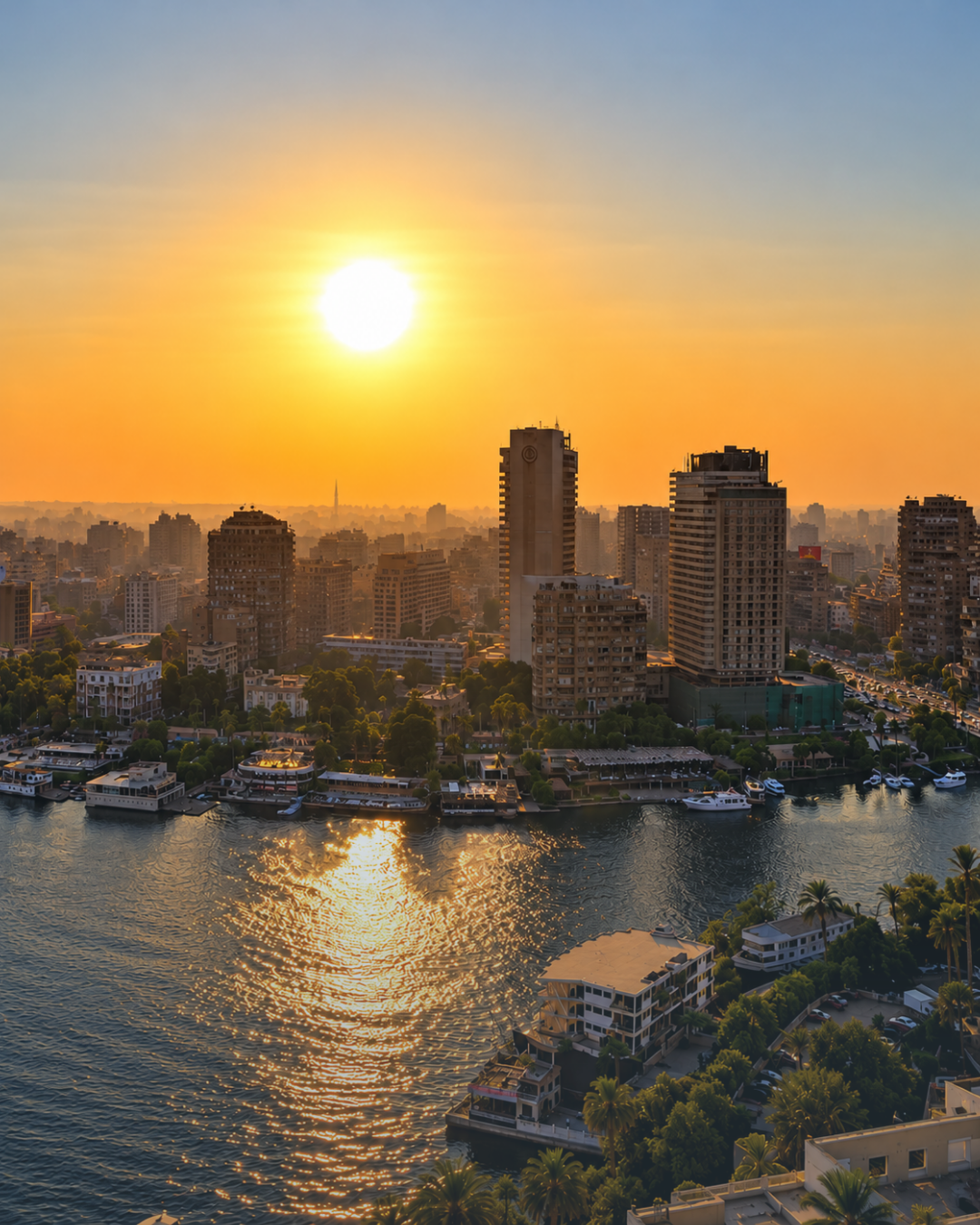
Egypt has highlighted the international recognition of Cairo, Giza, and Aswan within UNESCO’s Creative Cities Network, celebrating the country’s diverse cultural identity and longstanding contributions to traditional crafts, folk arts, and cinema.
The recognition was highlighted during the Intangible Cultural Heritage Forward: Opportunities and Challenges conference, held from October 13 to 15, 2026, bringing together researchers, cultural specialists, and representatives of heritage organizations.
The three cities represent different aspects of Egypt’s creative identity. Cairo and Aswan are recognized for their traditional crafts and folk arts, while Giza is internationally recognized for its contribution to filmmaking.
Their membership reflects Egypt’s continuing efforts to preserve its cultural traditions while supporting creative industries and connecting local communities with international cultural networks.
UNESCO Creative Cities In Egypt Highlighted At Cultural Heritage Conference
Egypt’s cultural heritage took center stage during a three-day conference organized by the Supreme Council of Culture under the Ministry of Culture.
The event brought together more than 160 researchers and specialists across 27 research sessions, focusing on the protection, documentation, and development of intangible cultural heritage.
During the conference, Dr. Hala Abdel Gawad, representing the Egyptian National Commission for UNESCO, highlighted the inclusion of Cairo, Giza, and Aswan in UNESCO’s international cultural programs.
She emphasized Egypt’s extensive cultural heritage, which includes historical monuments, traditional artistic practices, crafts, and documentary heritage.
The discussions also addressed the importance of preserving cultural traditions and passing them on to future generations.
Although the recognition of the three cities was highlighted during the event, their membership in UNESCO’s Creative Cities Network dates to different years.
Aswan joined in 2005, followed by Cairo in 2017 and Giza in 2025.
The conference therefore provided an opportunity to highlight Egypt’s existing international cultural recognition rather than announce three new designations.
Cairo Recognized By UNESCO For Traditional Crafts And Folk Arts
Cairo became a member of the UNESCO Creative Cities Network in 2017, receiving recognition in the category of Crafts and Folk Art.
The designation reflects the city’s longstanding reputation as a center of traditional craftsmanship and cultural expression.
For centuries, Cairo has been home to artisans specializing in pottery, glassmaking, copperwork, ceramics, jewelry, textiles, and other traditional crafts.
Many of these practices developed within the historic neighborhoods of Islamic Cairo, where commercial streets and markets became closely associated with particular trades.
Areas such as Khan El Khalili and the surrounding historic districts continue to reflect this relationship between craftsmanship, trade, and cultural identity.
According to UNESCO, traditional crafts and folk arts remain central to Cairo’s cultural economy.
Local communities, workshops, and craft organizations play an important role in preserving techniques passed down through generations.
The city’s designation also recognizes initiatives aimed at supporting artisans and introducing traditional Egyptian products to wider audiences.
Among these are craft exhibitions, cultural festivals, and programs designed to support skills development and creative entrepreneurship.
Cairo’s membership in the UNESCO Creative Cities Network provides opportunities for international cooperation while encouraging the preservation of traditional artistic practices.
Cairo’s Historic Neighborhoods Preserve Living Cultural Traditions
Cairo’s cultural importance extends beyond its historic buildings and archaeological landmarks.
The city’s identity is also shaped by traditions that remain part of everyday life.
Craft workshops, traditional markets, religious celebrations, folk performances, and community festivals all contribute to its cultural landscape.
Many of these practices are examples of intangible cultural heritage, which refers to traditions, knowledge, skills, and forms of expression passed between generations.
Unlike historic monuments, intangible heritage is preserved primarily through people and communities.
For example, traditional copper engraving requires specialized knowledge that artisans develop through years of experience.
Similarly, glassblowing, textile production, and jewelry-making depend on techniques that are often passed from experienced craftspeople to younger generations.
UNESCO’s recognition of Cairo highlights the importance of protecting these practices alongside the city’s physical heritage.
The organization has also supported initiatives documenting traditional craftsmanship in Historic Cairo.
Such projects aim to identify surviving cultural practices, record endangered skills, and support communities involved in maintaining traditional crafts.
These efforts help ensure that Cairo’s cultural heritage continues to exist as a living part of the city rather than becoming limited to historical exhibitions.
Giza Joins UNESCO Creative Cities Network For Film
While Cairo’s recognition focuses on traditional craftsmanship, Giza joined UNESCO’s Creative Cities Network in 2025 in the Film category.
The designation acknowledges Giza’s longstanding contribution to Egyptian cinema and its role in supporting the country’s audiovisual industry.
Although internationally associated with the Pyramids of Giza and the Great Sphinx, the city also has an extensive history connected to filmmaking.
Giza has hosted several important film production facilities, including Studio Misr, Al-Ahram Studio, and Studio Al-Nahas.
These institutions contributed to the development of Egyptian cinema throughout the twentieth century.
Studio Misr, established in 1935, became an important part of Egypt’s early modern film industry, helping develop local production capabilities and technical expertise.
Over time, Egypt’s cinema industry expanded into one of the Arab world’s most influential entertainment sectors.
Giza continued supporting film production through studios, professional training, technical facilities, and creative institutions.
Its UNESCO designation recognizes the city’s historical contribution alongside its potential to support future filmmaking.
The recognition also creates opportunities to strengthen cooperation with other cities participating in UNESCO’s international film network.
How Giza’s Film Industry Supports Egypt’s Cultural Identity
Cinema has played a central role in shaping Egypt’s cultural presence across the Arab world.
For decades, Egyptian films have reached audiences throughout the region, influencing popular culture, entertainment, and artistic expression.
Giza’s film production infrastructure has contributed to that development.
The city is home to studios and creative facilities supporting different stages of production, including filming, editing, sound, and technical services.
Its varied urban environments and nearby archaeological landmarks also provide distinctive filming locations.
According to UNESCO, Giza’s creative identity is supported by film festivals, screening venues, educational institutions, and cultural programs.
These activities create opportunities for filmmakers, technicians, performers, and other professionals working in the audiovisual sector.
The city’s membership in the Creative Cities Network is intended to encourage further investment in filmmaking infrastructure and expand professional development opportunities.
It also supports international cultural exchange through partnerships with cities sharing similar creative priorities.
For Egyptian filmmakers, such cooperation can help develop new opportunities for collaboration, knowledge-sharing, and participation in international cultural activities.
Giza’s designation highlights the importance of recognizing cinema not only as entertainment but also as a creative industry connected to employment, education, and cultural development.
Aswan Recognized For Its Nubian Crafts And Folk Traditions
Aswan became a UNESCO Creative City of Crafts and Folk Art in 2005, making it the earliest of the three Egyptian cities to join the network.
Located in southern Egypt, Aswan has a distinctive cultural identity shaped by its ancient history, Nubian traditions, and longstanding connection to the Nile.
The city’s heritage includes traditional crafts, music, dance, clothing, jewelry, and community celebrations.
Among its recognized craft traditions are beadwork, pottery, embroidery, palm-leaf weaving, and handmade decorative products.
Many of these practices remain connected to Nubian communities and their cultural traditions.
UNESCO highlights Aswan’s extensive folk arts heritage, including more than 50 traditional folk dances associated with local communities.
Music and dance continue to play an important role in weddings, celebrations, and other social occasions.
The Aswan Folk Troupe has also contributed to preserving traditional performing arts by presenting local dances and musical performances to audiences across Egypt.
These activities help maintain cultural knowledge while introducing younger generations and visitors to the region’s artistic traditions.
Aswan’s UNESCO recognition reflects the importance of protecting cultural practices that remain closely connected to community life.
Aswan’s Cultural Heritage Extends Beyond Ancient Monuments
Aswan is internationally recognized for its ancient monuments, including the Temple of Philae and the nearby temples of Abu Simbel.
However, its UNESCO Creative City designation focuses on the region’s living artistic traditions rather than its archaeological monuments.
The city’s cultural heritage reflects centuries of interaction between Egyptian and Nubian communities.
Traditional clothing, jewelry, decorative patterns, and handcrafted objects preserve elements of this shared history.
Local artisans continue producing handmade goods using techniques associated with earlier generations.
Aswan also hosts cultural institutions that contribute to preserving the region’s traditions.
The Nubia Museum, for example, documents Nubian history and culture while highlighting the artistic heritage of local communities.
The city is also known for the Aswan International Sculpture Symposium, which brings together artists working with the region’s distinctive granite.
The symposium connects contemporary artistic practice with Aswan’s long history of stone carving.
According to UNESCO, Aswan’s cultural activities contribute to education, community development, and international artistic exchange.
The city’s membership in the Creative Cities Network supports initiatives intended to strengthen local craftsmanship, preserve traditional knowledge, and encourage sustainable cultural development.
Egypt’s UNESCO Recognition Extends Beyond Its Creative Cities
The recognition of Cairo, Giza, and Aswan forms part of Egypt’s wider relationship with UNESCO.
However, several different UNESCO programs recognize different aspects of cultural heritage.
The UNESCO Creative Cities Network focuses on cities that use creativity and cultural industries as part of sustainable development.
By contrast, the UNESCO World Heritage List recognizes cultural and natural properties considered to have outstanding universal value.
Egypt currently has seven properties on UNESCO’s World Heritage List, including Historic Cairo, the Giza pyramid fields, the Nubian monuments from Abu Simbel to Philae, and Ancient Thebes with its Necropolis.
These designations are separate from membership in the Creative Cities Network.
A city may contain internationally recognized archaeological sites while also receiving recognition for its contemporary creative industries or traditional cultural practices.
Giza provides a clear example.
Its ancient pyramids form part of a UNESCO World Heritage property, while the city’s separate Creative City designation recognizes its contributions to film.
Similarly, Aswan’s ancient monuments are internationally protected through UNESCO’s World Heritage framework, while its Creative City membership celebrates traditional crafts and folk arts.
Understanding these distinctions helps explain the different forms of international cultural recognition associated with Egypt.
Egypt Has 11 Elements On UNESCO’s Intangible Cultural Heritage Lists
During the October 2026 conference, Egyptian representatives also highlighted the country’s success in securing international recognition for its intangible cultural traditions.
According to UNESCO, Egypt has 11 cultural elements inscribed on its Intangible Cultural Heritage Lists.
These include traditional artistic practices, social customs, and forms of cultural expression.
Among the recognized elements are Tahteeb, the traditional Egyptian stick game, inscribed in 2016, and traditional hand puppetry, recognized in 2018.
UNESCO also recognized handmade weaving in Upper Egypt in 2020 and festivals associated with the Journey of the Holy Family in Egypt in 2022.
More recent inscriptions include traditional metal engraving practices in 2023.
In 2024, Egypt participated in the recognition of henna traditions and the crafting and playing of the semsemiah instrument.
The country’s latest inscription came in 2025, when Koshary and the cultural practices associated with the popular Egyptian dish were added to UNESCO’s Representative List of the Intangible Cultural Heritage of Humanity.
These recognitions demonstrate the diversity of Egypt’s cultural identity.
They also highlight the importance of preserving traditions that remain part of everyday life, from traditional food and music to craftsmanship and community celebrations.
Unlike historical monuments, these cultural practices depend on continued participation by the communities that maintain them.
Their preservation therefore requires documentation, education, and opportunities for younger generations to learn and practice traditional skills.
Cultural Heritage Conference Brings Together More Than 160 Specialists
The October 2026 conference provided a platform for discussing how Egypt can strengthen the preservation of its intangible cultural heritage.
Held between October 13 and 15, the event brought together more than 160 researchers and specialists through 27 research sessions.
The conference was organized through cooperation between the Supreme Council of Culture and several academic and cultural institutions.
Activities took place at the Supreme Council of Culture, with additional sessions hosted by Misr University for Science and Technology.
The program explored several major themes, including the future of traditional folk performances and the challenges facing endangered cultural practices.
Researchers also discussed the relationship between traditional craftsmanship and environmental sustainability.
Another important subject was the use of digital technology and artificial intelligence to document and preserve intangible heritage.
The conference examined how emerging technologies could support the recording of traditional knowledge, cultural performances, and craft techniques.
Participants also explored traditional knowledge connected to health, agriculture, water, and the environment.
Beyond academic discussions, the event included cultural performances and exhibitions highlighting Egyptian craftsmanship.
These activities provided examples of how traditional arts remain part of contemporary cultural life.
The conference was held in connection with the International Day of Intangible Cultural Heritage, observed annually on October 17.
Why UNESCO’s Creative Cities Network Matters For Egypt
Established in 2004, the UNESCO Creative Cities Network promotes cooperation between cities that consider culture and creativity important elements of sustainable development.
The network brings together cities recognized in different creative fields, including crafts and folk arts, film, music, literature, design, gastronomy, architecture, and media arts.
Its objectives extend beyond acknowledging cultural achievements.
Participating cities are encouraged to develop creative industries, support cultural professionals, expand public participation in artistic activities, and exchange experiences with international partners.
For Egypt, the membership of Cairo, Giza, and Aswan highlights three distinct areas of cultural strength.
Cairo represents traditional craftsmanship and the preservation of historic urban artistic practices.
Giza reflects Egypt’s longstanding contribution to cinema and the development of its audiovisual industries.
Aswan highlights the importance of Nubian cultural traditions, folk performances, and handmade crafts.
Together, these cities demonstrate how cultural heritage can support contemporary creativity and economic development.
The designations also create opportunities for cooperation between Egyptian cultural institutions and international partners.
However, UNESCO recognition does not automatically guarantee financial support or the protection of individual cultural practices.
Maintaining a city’s creative identity requires continued investment in education, cultural infrastructure, local communities, and opportunities for artists and craftspeople.
Preserving Egypt’s Cultural Identity For Future Generations
The conference’s discussions emphasized that cultural heritage is not limited to objects preserved in museums or monuments protected at archaeological sites.
It also includes traditions, skills, stories, music, and artistic practices that communities continue to develop and share.
For Egypt, the preservation of these traditions is closely connected to maintaining cultural diversity.
Cairo’s traditional workshops, Giza’s film industry, and Aswan’s Nubian craftsmanship represent different forms of artistic knowledge.
Although these creative fields have distinct histories, they share an important connection to the communities that sustain them.
Protecting traditional crafts requires opportunities for artisans to continue practicing and teaching their skills.
Supporting filmmaking involves developing professional talent and maintaining the infrastructure needed for creative production.
Preserving folk traditions depends on community participation and the continued transmission of cultural knowledge.
The October conference highlighted the importance of combining these efforts with documentation, education, and international cultural cooperation.
It also reinforced the role that Egyptian institutions and local communities play in protecting the country’s diverse cultural traditions.
Cairo, Giza And Aswan Reflect Egypt’s Living Cultural Heritage
Egypt’s decision to highlight Cairo, Giza, and Aswan within UNESCO’s Creative Cities Network draws attention to the country’s cultural identity beyond its internationally recognized archaeological monuments.
From Cairo’s historic craftsmanship to Giza’s cinematic legacy and Aswan’s traditional Nubian arts, the three cities represent different aspects of Egyptian creativity.
Their recognition also reflects the importance of protecting traditions that continue to shape everyday cultural life.
The October 2026 conference provided an opportunity to revisit these achievements while exploring the challenges facing intangible cultural heritage.
As Egypt continues developing initiatives to document traditional practices, support creative industries, and encourage cultural education, the role of these cities remains significant.
Together, Cairo, Giza, and Aswan demonstrate how Egypt’s cultural legacy extends beyond its ancient past, connecting centuries of artistic traditions with contemporary creativity and future generations.