Egyptian food and beverage company Beyti has begun introducing hydrogen injection technology across 104 vehicles in its distribution fleet, marking another step in its efforts to improve fuel efficiency and reduce the environmental impact of its operations.
The Beyti hydrogen injection initiative, announced on October 12, 2026, is being implemented in partnership with Egyptian climate technology company Jadeed, with the goal of reducing average emissions from participating vehicles by up to 20%.
The project represents the first phase of a broader effort to explore practical environmental solutions across Beyti’s operations, building on previous investments in renewable energy, sustainable packaging, and waste reduction.
Beyti Hydrogen Injection Initiative Targets 20% Lower Vehicle Emissions
Beyti, a subsidiary of Saudi food and beverage company Almarai, announced that it had begun implementing hydrogen injection technology in 104 vehicles from its distribution fleet.
The initiative aims to improve engine efficiency, reduce fuel consumption, and lower the emissions generated during daily distribution operations.
According to the company’s announcement, the technology is being introduced in cooperation with Jadeed, a climate technology solutions provider specializing in improving energy efficiency and reducing environmental impact.
The project will be evaluated under real-world operating conditions, allowing both companies to assess the technology’s effectiveness during everyday vehicle use.
Beyti is targeting a reduction of up to 20% in average emissions from the vehicles participating in the project.
However, the figure represents a performance objective rather than a confirmed reduction already achieved.
The companies will monitor the results to determine how effectively the technology performs and whether it could support further improvements across Beyti’s transportation operations.
The initiative also forms part of the company’s wider sustainability strategy, which focuses on reducing emissions, improving resource efficiency, and developing more environmentally responsible business practices.
[Image: Beyti distribution vehicles or the official hydrogen injection initiative announcement.]
How Does Hydrogen Injection Technology Work?
Unlike fully hydrogen-powered vehicles, which use hydrogen as their primary energy source, Beyti’s new initiative uses hydrogen injection technology to supplement the fuel already used by participating vehicles.
The technology works by introducing hydrogen into the engine’s fuel or combustion system.
According to the companies involved, adding hydrogen is intended to improve the combustion process, allowing the engine to operate more efficiently.
Better combustion efficiency can potentially reduce conventional fuel consumption and lower certain emissions generated during vehicle operation.
For businesses operating large distribution fleets, even relatively small improvements in fuel efficiency can translate into lower operating costs over time.
However, the effectiveness of hydrogen supplementation depends on several factors, including engine design, operating conditions, hydrogen delivery, and the way the combustion system is managed.
Research into hydrogen-assisted combustion has shown that it can improve efficiency and reduce some emissions under certain conditions.
Other studies have also identified potential trade-offs, including increases in nitrogen oxide emissions under particular operating conditions.
This makes real-world testing important when evaluating whether the technology can deliver consistent environmental benefits.
For Beyti, the current initiative focuses on measuring these potential improvements within its existing distribution operations.
Beyti Partners With Egyptian Climate Technology Company Jadeed
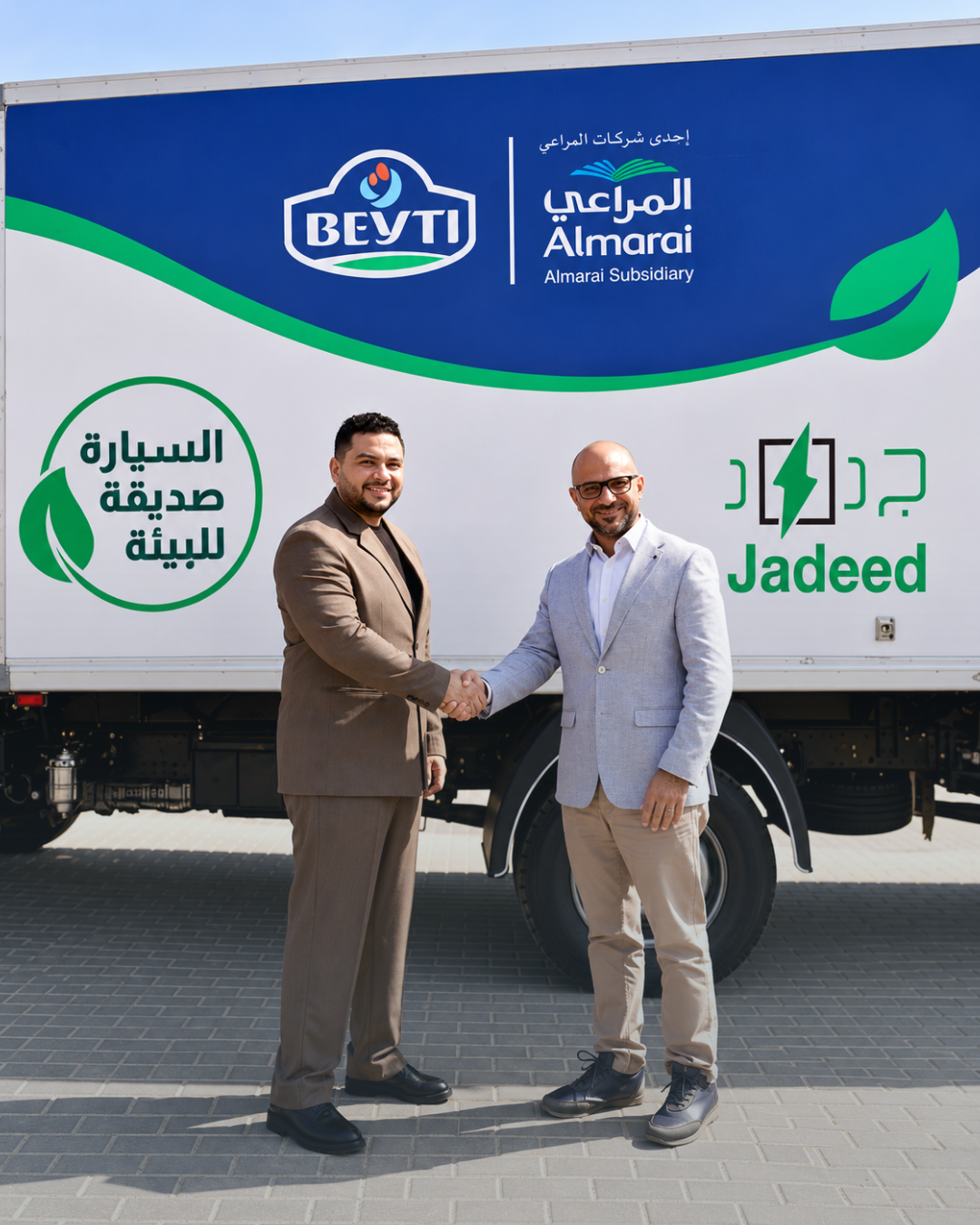
The project is being developed through a partnership between Beyti and Jadeed, an Egyptian company specializing in climate technology solutions.
Jadeed is working with Beyti to introduce the hydrogen injection system and assess its performance across the participating vehicles.
The company has identified its Green Turbo hydrogen technology as the solution being tested through the partnership.
Jadeed is also part of The Catalyst’s climate technology investment portfolio, which supports emerging companies developing practical environmental solutions.
The partnership provides an opportunity to move beyond controlled testing environments and evaluate the technology during regular commercial operations.
For Jadeed, working with a major food and beverage producer creates an opportunity to demonstrate how its technology performs across a substantial number of operational vehicles.
For Beyti, the collaboration offers a way to explore potential improvements in transportation efficiency without immediately replacing its existing fleet.
Ahmed Tarek, CEO of Jadeed, explained that the partnership aims to test practical solutions capable of reducing fuel consumption and emissions while evaluating their performance through daily use.
He also emphasized that the results would help determine whether the technology could be developed further or introduced on a larger scale.
The collaboration highlights how partnerships between established businesses and emerging technology companies can support the development of new environmental solutions in Egypt.
[Image: Jadeed Green Turbo technology or representatives from Beyti and Jadeed.]
A New Step In Beyti’s Sustainability Strategy
The hydrogen injection project is part of Beyti’s broader environmental strategy, which focuses on improving efficiency and reducing the environmental impact of its operations.
Beyti has been operating in Egypt since 1998 and has developed into one of the country’s established producers of dairy products, juices, and other food and beverage products.
Today, the company operates as a subsidiary of Almarai, with a business that includes manufacturing, distribution, and export activities.
These operations require significant resources, including energy, transportation, packaging materials, and water.
As a result, improving efficiency across different areas of the business has become an important component of the company’s sustainability efforts.
Chris Abboud, General Manager of Beyti, described the introduction of hydrogen injection technology as another step toward translating the company’s environmental commitments into practical action.
He emphasized that sustainability involves continuous improvement and the development of solutions that can reduce the environmental impact of everyday business operations.
The initiative also aligns with Beyti’s “Doing Better Every Day” strategy, which focuses on improving performance while supporting responsible business practices.
The current deployment represents an initial phase rather than the completion of a wider fleet transformation.
Future developments will depend partly on the results of the testing process.
Beyti’s Previous Investments In Natural Gas And Solar Energy
Before introducing hydrogen injection technology, Beyti had already implemented several initiatives aimed at reducing emissions and improving energy efficiency.
In 2020, the company began partially transitioning from conventional fuels to natural gas.
According to Beyti’s sustainability announcement, this transition contributed to a 30% reduction in carbon dioxide emissions associated with the initiative.
The company subsequently expanded its investment in renewable energy.
In 2021, Beyti invested in a solar power project with an announced capacity of 7.6 megawatts.
The project was reported to supply approximately 20% of the company’s factory energy requirements, reducing its reliance on conventional electricity sources.
Beyti has continued developing its renewable energy operations in the years since, with Almarai’s sustainability reporting documenting further investment in solar power and operational efficiency.
These initiatives demonstrate how the company has approached environmental improvements across different parts of its business.
The natural gas transition focused on energy consumption, while solar investments addressed electricity requirements at its manufacturing facilities.
The latest hydrogen injection project extends that approach to transportation, introducing another potential opportunity to reduce energy consumption and operational emissions.
[Image: Beyti manufacturing facilities or solar energy installations.]
Beyti Also Expands Its Beverage Carton Recycling Efforts
Transportation and energy are not the only areas covered by Beyti’s environmental initiatives.
In October 2025, the company participated in the launch of Egypt’s first nationwide campaign dedicated to collecting and recycling used beverage cartons.
The initiative, called “Dawar El3elba Tdorlak,” brought together Beyti, Tetra Pak, Juhayna, and Uniboard, with support from Egyptian environmental authorities.
The campaign was designed to encourage consumers to separate used beverage cartons from household waste and participate in organized recycling programs.
It also aimed to improve public awareness of the environmental benefits associated with recycling and reducing waste.
The initiative built on the development of Egypt’s first dedicated beverage carton recycling line, established through cooperation between Tetra Pak and Uniboard.
The facility was developed to process used beverage cartons and recover materials that can be reused in manufacturing.
By participating in the campaign, Beyti expanded its sustainability activities beyond its own production facilities and transportation network.
The initiative also reinforced the company’s commitment to promoting a circular economy, in which materials remain in use for longer rather than being discarded after a single use.
Together with its renewable energy investments, these recycling activities form part of Beyti’s efforts to address environmental challenges across different stages of its operations.
Beyti Sets Environmental Targets For 2030
Beyti’s latest transportation initiative also supports the environmental objectives outlined in its sustainability vision for 2030.
According to the company’s announced targets, it aims to achieve a 25% reduction in its carbon footprint by the end of the decade.
The strategy also includes a target to improve resource-use efficiency by 20%.
Waste management represents another important component of the plan.
Beyti aims to eliminate waste sent to landfills while ensuring that all its product packaging is recyclable.
The main objectives include reducing the company’s carbon footprint, improving resource efficiency, preventing landfill waste, and developing fully recyclable packaging.
These targets cover several different environmental challenges, from energy consumption and transportation emissions to the materials used in production and packaging.
The hydrogen injection initiative contributes to the transportation component of that strategy.
However, the announced target of reducing emissions from participating vehicles by up to 20% is separate from Beyti’s company-wide goal of reducing its overall carbon footprint by 25%.
The two figures measure different objectives and should not be treated as interchangeable.
The results of the ongoing fleet trial will help establish how much the new technology can contribute to the company’s broader sustainability commitments.
Why Cleaner Distribution Fleets Matter For Egypt’s Businesses
For companies operating large distribution networks, transportation can represent an important source of fuel consumption and greenhouse gas emissions.
Food and beverage producers depend on delivery vehicles to move products between manufacturing facilities, warehouses, retailers, and other distribution points.
These activities can involve extensive daily travel, particularly for businesses supplying products across multiple governorates.
Improving transportation efficiency can therefore support both environmental and operational objectives.
Possible approaches include adopting more fuel-efficient vehicles, improving route planning, introducing alternative fuels, and investing in technologies designed to reduce fuel consumption.
Hydrogen injection represents one potential approach for existing combustion-engine vehicles.
However, the environmental benefits of any particular system must be assessed using reliable measurements, especially when the technology is introduced across a fleet operating under different conditions.
Factors such as distance traveled, vehicle load, fuel use, and maintenance requirements can all influence the results.
For Egyptian businesses considering similar solutions, the Beyti-Jadeed project could provide a useful example of how emerging technologies are evaluated in everyday commercial operations.
Its significance will ultimately depend on the reductions demonstrated during testing and the practicality of maintaining those improvements over time.
What Comes Next For Beyti’s Hydrogen-Enhanced Fleet?
The current deployment marks the beginning of Beyti’s hydrogen injection initiative rather than the completion of its evaluation.
The company and Jadeed will assess how the technology performs across the 104 participating vehicles during regular distribution activities.
The testing process is intended to determine whether hydrogen supplementation can improve fuel efficiency and reduce emissions under practical operating conditions.
The results will also help the companies evaluate potential opportunities for further development and expansion.
At the time of the October announcement, Beyti had not published independently verified results demonstrating that the participating vehicles had achieved the targeted 20% emissions reduction.
The company also had not announced a confirmed timetable for expanding the technology across its entire distribution fleet.
Any future rollout will depend on the performance of the current initiative and the decisions made following its evaluation.
For now, the project represents a practical test of an emerging technology within one of Egypt’s established food and beverage companies.
Another Step Toward More Sustainable Transportation
Beyti’s introduction of hydrogen injection technology across 104 distribution vehicles represents another development in its efforts to reduce fuel consumption and improve environmental performance.
Working with Egyptian climate technology company Jadeed, the company is targeting a reduction of up to 20% in average emissions from participating vehicles while assessing the technology under real-world operating conditions.
The initiative builds on earlier investments in natural gas, solar energy, and beverage carton recycling, forming part of a wider sustainability strategy extending to 2030.
Although the environmental results have yet to be established, the project highlights growing interest in using emerging technologies to improve the efficiency of existing transportation operations.
As Beyti and Jadeed continue evaluating the participating vehicles, the results will determine whether hydrogen injection can become a larger part of the company’s efforts to reduce its environmental footprint.