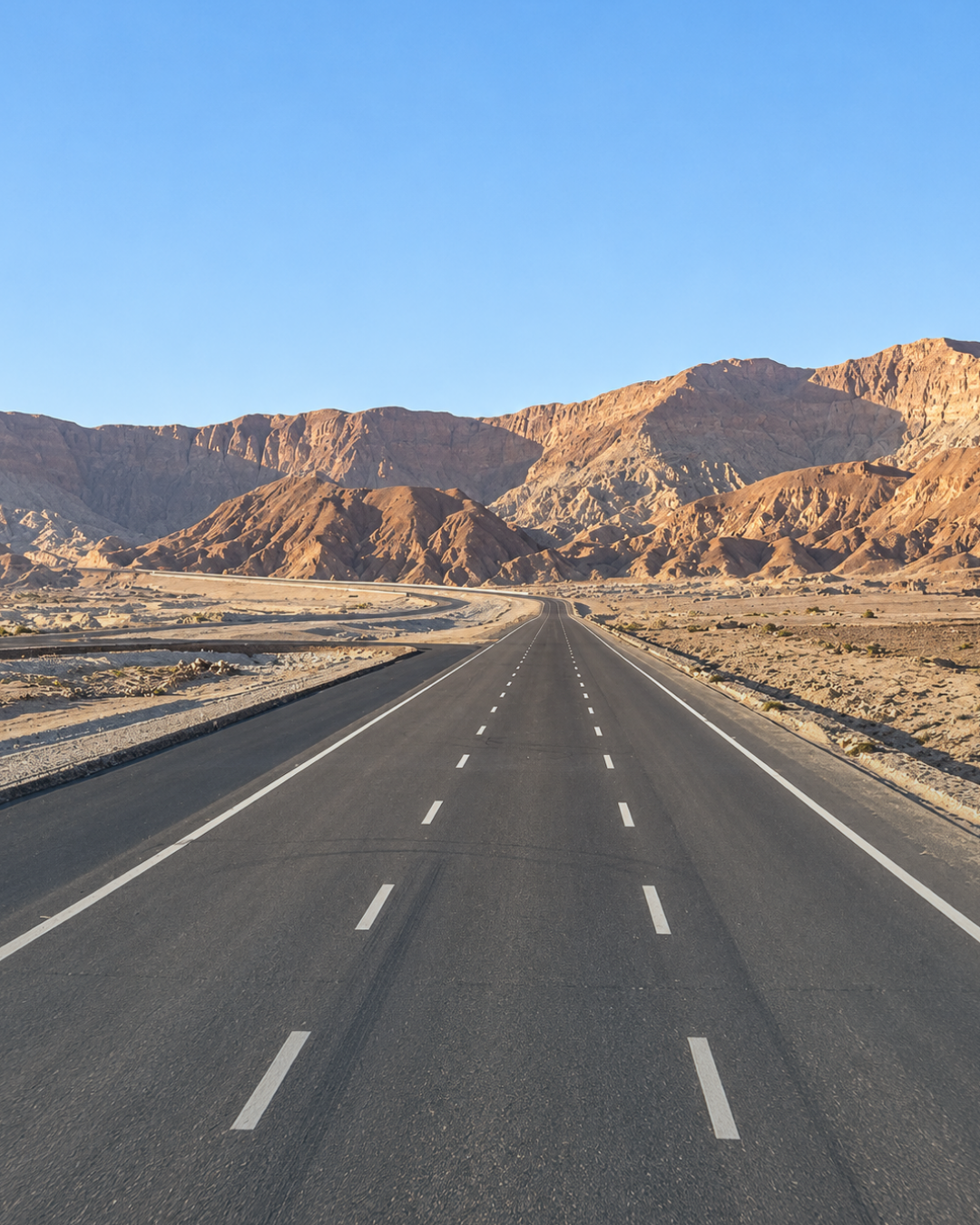
Traveling to Sharm El Sheikh has become significantly more convenient thanks to the Oyoun Mousa–Sharm El Sheikh Road, a major Egyptian infrastructure project that reduced the reported road distance from approximately 540 km to 342 km.
The highway, also known as the Tunnel–Sharm El Sheikh Road, provides a shorter connection through South Sinai, linking the area near the Ahmed Hamdi Tunnel with one of Egypt’s most popular Red Sea destinations.
According to official figures published by South Sinai Governorate, the new alignment reduces the reported route distance by 198 km, representing a reduction of approximately 37%.
The project was inaugurated in November 2019 and remains an important part of Egypt’s road infrastructure, with renewed attention in October 2026 highlighting its role in improving connectivity between Cairo and Sharm El Sheikh.
Oyoun Mousa–Sharm El Sheikh Road Reduces Distance From 540 Km To 342 Km
One of the most significant features of the Oyoun Mousa–Sharm El Sheikh Road is its shorter route compared with the previous road network.
According to South Sinai Governorate, the highway extends for 342 km, compared with approximately 540 km for the older route.
This represents a difference of 198 km, reducing the reported distance by nearly 200 km.
The project follows a more direct alignment toward Sharm El Sheikh, avoiding some of the longer sections and diversions associated with the previous route.
The reduction in distance was intended to make journeys more convenient for residents, visitors, transport operators, and businesses traveling between the Suez Canal region and South Sinai.
It also provides an alternative to older coastal road sections that previously handled much of the traffic heading toward Sharm El Sheikh.
The project’s design combines a shorter alignment with additional lanes and supporting infrastructure, allowing vehicles to travel along a more direct highway.
However, the 342 km figure refers to the road corridor itself and should not be confused with the total driving distance from central Cairo to Sharm El Sheikh.
How Long Does It Take To Drive From Cairo To Sharm El Sheikh?
The Oyoun Mousa–Sharm El Sheikh Road was designed to reduce the time required to travel from Cairo to the Red Sea resort city.
Government project descriptions have promoted a journey time of approximately four hours from the Fifth Settlement area of New Cairo to Sharm El Sheikh under suitable driving conditions.
This represents a substantial improvement over longer journeys previously associated with the older road network.
According to South Sinai Governorate’s published project figures, the road’s 342 km length can be combined with approximately 110 km along the Cairo–Suez Desert Road.
This produces an estimated route distance of 452 km between Cairo and Sharm El Sheikh.
However, the actual distance traveled depends on the starting point in Cairo, the chosen route, and the final destination within Sharm El Sheikh.
Similarly, the four-hour journey time should be treated as an estimate rather than a guaranteed driving duration.
Traffic conditions, toll gates, security procedures, rest stops, weather, and road maintenance may all influence travel times.
For drivers planning a trip, checking current navigation information remains important.
Which Cities Does The Oyoun Mousa–Sharm El Sheikh Road Connect?
The highway begins near the Oyoun Mousa area, south of the Ahmed Hamdi Tunnel, and extends through South Sinai toward Sharm El Sheikh.
Its alignment provides access to several important cities along the western side of the Sinai Peninsula.
These include:
- Ras Sidr
- Abu Zenima
- Abu Rudeis
- El Tor
- Sharm El Sheikh
Rather than following the same alignment as the older coastal route throughout its length, the highway uses a more direct corridor with connecting roads serving nearby cities.
Four connecting roads were constructed to improve access to Ras Sidr, Abu Zenima, Abu Rudeis, and El Tor.
According to the Egyptian Presidency’s official project description, these connecting roads have a combined length of approximately 22 km.
They were designed to make it easier for motorists to reach the surrounding urban areas without requiring the main highway to follow every section of the old coastal route.
This connectivity is particularly important for local communities that depend on road transportation for employment, trade, education, and essential services.
The highway also connects with roads serving the Ahmed Hamdi Tunnel, an important crossing between mainland Egypt and the Sinai Peninsula.
What Are The Main Features Of The Oyoun Mousa–Sharm El Sheikh Road?
Beyond reducing travel distance, the highway was developed with infrastructure intended to accommodate substantial traffic volumes.
The Egyptian Presidency and South Sinai Governorate have published several details about the project’s design.
Three Traffic Lanes In Each Direction
The highway features three traffic lanes in each direction, providing six lanes across the two carriageways.
This arrangement was designed to accommodate different types of vehicles while improving traffic movement along the route.
The road also includes paved shoulders and a central dividing area.
These features form part of the project’s broader highway design, although motorists must still follow posted speed limits and road regulations.
Connecting Roads To Major South Sinai Cities
Four connecting roads link the main highway with Ras Sidr, Abu Zenima, Abu Rudeis, and El Tor.
The connections were designed to improve accessibility for nearby communities and support movement between the highway and the surrounding urban areas.
Fuel Stations And Rest Areas
Government announcements about the project described plans for 14 fuel stations, distributed across both directions.
The proposed distribution included seven stations serving each direction.
Rest facilities were also included in the project’s development plans to support motorists traveling across longer distances.
The availability and operating status of individual stations should be checked before traveling, particularly for drivers planning longer journeys through Sinai.
Emergency And Security Infrastructure
The highway project also included emergency and security infrastructure.
Official project descriptions refer to seven gates serving different locations along the corridor, including Oyoun Mousa, Ras Sidr, Abu Zenima, Abu Rudeis, Wadi Feiran, El Tor, and Sharm El Sheikh.
The infrastructure was designed to support road management, security operations, and assistance for motorists.
The original project also incorporated drainage structures and other engineering works intended to protect and maintain the road.
When Was The Oyoun Mousa–Sharm El Sheikh Road Opened?
Although the highway has recently appeared in Egyptian news coverage, it was not constructed or inaugurated in 2026.
The project dates back to the development of Egypt’s national road network during the late 2010s.
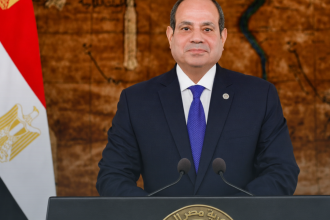
President Abdel Fattah El-Sisi officially inaugurated the 342 km Tunnel–Sharm El Sheikh Road in November 2019, alongside other development projects in the Suez and South Sinai governorates.
The opening was confirmed through the Egyptian Presidency’s official national projects website.
Reports from November 2020 also documented trial operations on the highway, attended by South Sinai Governor Khaled Fouda.
The project was developed to improve the movement of vehicles traveling toward Sharm El Sheikh and to strengthen transportation connections with other parts of South Sinai.
It formed part of Egypt’s broader investment in roads, tunnels, and transportation infrastructure.
The renewed media attention in October 2026 has focused primarily on the road’s shorter distance and the travel benefits associated with its design.
Therefore, the project should be described as an established highway rather than an entirely new route being launched this year.
How The New Sharm El Sheikh Road Supports Tourism In South Sinai
Sharm El Sheikh is one of Egypt’s best-known tourism destinations, attracting domestic and international visitors throughout the year.
The city is particularly popular for its Red Sea beaches, diving locations, resorts, and recreational activities.
Improving road connections to Sharm El Sheikh was one of the objectives behind the highway project.
A more direct route can make domestic road trips more convenient for visitors traveling from Cairo, Suez, and other Egyptian cities.
It can also support businesses involved in tourism transportation, including private drivers, tour operators, and companies serving hotels and resorts.
For Egyptian families traveling by car, shorter road journeys may make weekend trips and short holidays more practical.
The improved road connection also provides opportunities for visitors to explore other South Sinai destinations.
Ras Sidr, El Tor, and surrounding coastal areas can benefit from better access to the wider road network.
However, the extent of the project’s contribution to visitor numbers and tourism revenue cannot be determined from road-length figures alone.
Tourism demand also depends on accommodation availability, transportation costs, travel preferences, and economic conditions.
Why The Oyoun Mousa–Sharm El Sheikh Road Matters For Sinai Development
The highway was developed not only to improve travel times but also to support wider economic and urban development in Sinai.
According to the Egyptian Presidency, the project was intended to encourage urban expansion, improve accessibility, and stimulate economic activity in South Sinai.
Better transportation connections can influence the development of residential areas, commercial services, and industrial activities.
For businesses operating in the governorate, a more direct highway provides an additional transportation link for moving goods, equipment, and workers.
It can also make it easier for residents to travel between cities for employment, healthcare, and education.
The road connects with wider transportation infrastructure serving Sinai, including the Ahmed Hamdi Tunnel.
This connection is important because the tunnel provides a major crossing between mainland Egypt and the Sinai Peninsula.
Improving access between the tunnel and South Sinai’s cities was a central objective of the highway’s development.
The project also forms part of Egypt’s long-term efforts to expand and modernize its national road network.
What Should Drivers Know Before Using The Road?
For motorists planning to travel between Cairo and Sharm El Sheikh, the highway provides an established route toward South Sinai.
However, several practical details are worth considering.
First, the published distance figures do not represent every possible journey. The 342 km measurement refers to the highway, while the total trip from Cairo is longer.
Second, the approximately four-hour journey time is an indicative estimate and should not be treated as a fixed schedule.
Third, road conditions and traffic arrangements can change because of maintenance, weather, or other operational requirements.
Drivers should check up-to-date navigation information and official traffic announcements before setting out.
Travelers should also plan fuel stops, carry sufficient water, and allow additional time for rest breaks.
For long-distance journeys, following posted speed limits and taking regular breaks remain important safety precautions.
These considerations apply even when using a modern highway designed to reduce travel distance.
Oyoun Mousa–Sharm El Sheikh Road Remains An Important Highway For Egypt
The Oyoun Mousa–Sharm El Sheikh Road represents a significant improvement in the transportation network connecting mainland Egypt with South Sinai.
With a length of 342 km compared with approximately 540 km for the older route, the highway reduced the reported distance by nearly 200 km.
Its six-lane design, connections to major South Sinai cities, and supporting infrastructure were developed to make travel more convenient while supporting regional development.
The project also provides a shorter road connection toward Sharm El Sheikh, helping improve accessibility to one of Egypt’s leading tourism destinations.
Although the road was inaugurated in 2019 rather than 2026, its benefits remain relevant to motorists traveling across the Sinai Peninsula.
As Egypt continues developing its transportation infrastructure, the Oyoun Mousa–Sharm El Sheikh Road remains an example of how major highway projects can improve connectivity between cities and regions.