
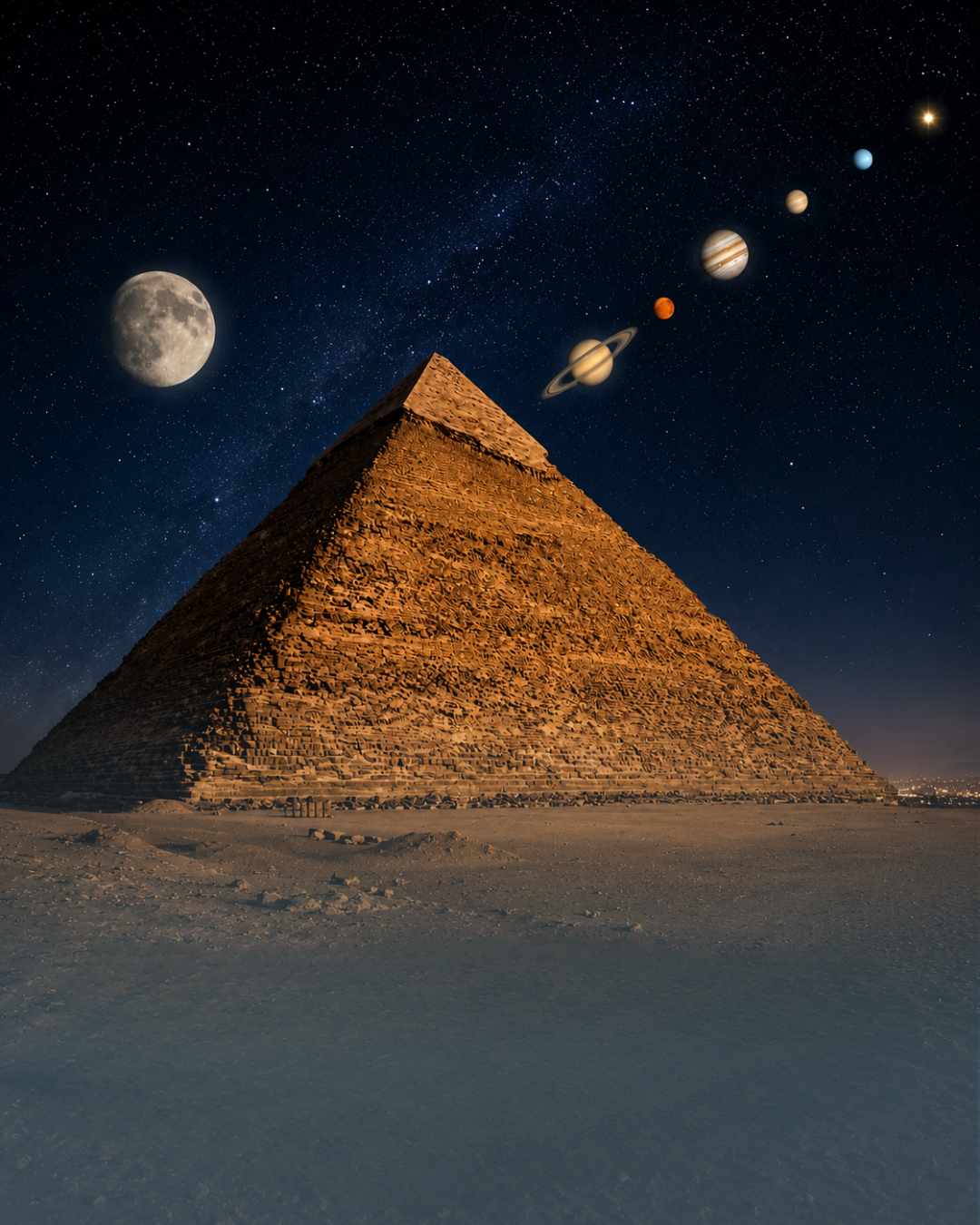
Egyptian skywatchers were treated to an unusually busy night of astronomy on August 12, 2026, as the annual Perseid meteor shower coincided with a New Moon and a six-planet alignment in the pre-dawn sky.
The combination created some of the year’s best stargazing conditions, particularly in darker areas away from Cairo and other major cities. While a total solar eclipse also took place globally on the same day, it was not visible from Egypt.
Perseid Meteor Shower Reaches Its Peak
The highlight for viewers in Egypt was the Perseid meteor shower, one of the most anticipated annual meteor displays.
The shower peaked around the night of August 12 into the early hours of August 13 as Earth passed through debris left behind by Comet 109P/Swift-Tuttle. Under ideal dark-sky conditions, the Perseids can produce dozens of visible meteors per hour, with some estimates reaching around 100 during periods of strong activity.
This year offered particularly favorable conditions because the peak coincided almost exactly with a New Moon, eliminating bright moonlight that would normally make the fainter meteors harder to see.
For observers in Egypt, the best opportunities came after midnight and before dawn, particularly in desert and coastal locations with minimal light pollution.
Six Planets Appear Across the Morning Sky
August 12 also brought a large planetary alignment involving Jupiter, Mercury, Mars, Uranus, Saturn and Neptune.
Rather than forming a perfectly straight line, the planets appeared spread along the same general path across the sky before sunrise—an effect caused by the planets orbiting the Sun within roughly the same plane.
Mars and Saturn were among the easiest to identify, while Mercury and Jupiter appeared much lower on the horizon and were more difficult to catch as dawn approached.
Uranus and Neptune were too faint to be seen with the naked eye and required binoculars or a telescope.
The event gave early risers another reason to watch the sky before the Perseids became the main attraction later that night.
The New Moon Creates Ideal Stargazing Conditions
A New Moon occurred on August 12, with the Moon positioned between Earth and the Sun and therefore largely invisible in the night sky.
In Cairo, the New Moon occurred at approximately 8:36 p.m. local time, according to astronomical calendar data.
For meteor watchers, this was particularly important. Moonlight is one of the biggest natural sources of interference when viewing meteor showers, so the dark skies gave observers a better chance of spotting even weaker Perseid streaks.
What About the Total Solar Eclipse?
A total solar eclipse also occurred on August 12, making the day especially significant internationally.
NASA reported that the path of totality crossed parts of northern Russia, Greenland, Iceland, Spain and a small section of Portugal. Other parts of Europe, North America and northwestern Africa experienced a partial eclipse.
However, despite some social media posts grouping the eclipse with the events visible over Egypt, the August 12 solar eclipse could not be seen from Cairo or Egypt. Astronomy visibility data lists Egypt’s next visible solar eclipse as the major event on August 2, 2027.
That distinction is important: August 12 was still an exceptional night for Egyptian stargazers, but the solar eclipse itself belonged to observers farther north and west.
Where Was the Best Place to Watch in Egypt?
For the Perseids, the best locations were areas with very little artificial lighting and a wide, unobstructed view of the sky.
Egypt’s deserts naturally offer strong conditions for meteor watching, including areas of the Western Desert and Sinai, while remote parts of the North Coast and Red Sea can also provide darker skies than major urban centers.
Observers did not need telescopes to watch the meteor shower. In fact, meteors are generally easier to see with the naked eye because they can appear anywhere across a broad section of the sky. Astronomers recommend giving the eyes at least 20 minutes to adjust to darkness and avoiding bright phone screens while watching.
One of 2026’s Biggest Nights for Stargazing
The coincidence of the Perseid peak, a New Moon and a six-planet alignment made August 12 one of the most interesting astronomical dates of 2026.
For Egypt, the biggest spectacle came after dark: unusually moonless conditions, one of the year’s strongest meteor showers and several planets visible across the sky within the same night.
And although Egypt missed this year’s total solar eclipse, an even more significant event is approaching. On August 2, 2027, a total solar eclipse will cross parts of Egypt and North Africa, making the country one of the world’s prime viewing locations for the next major eclipse.