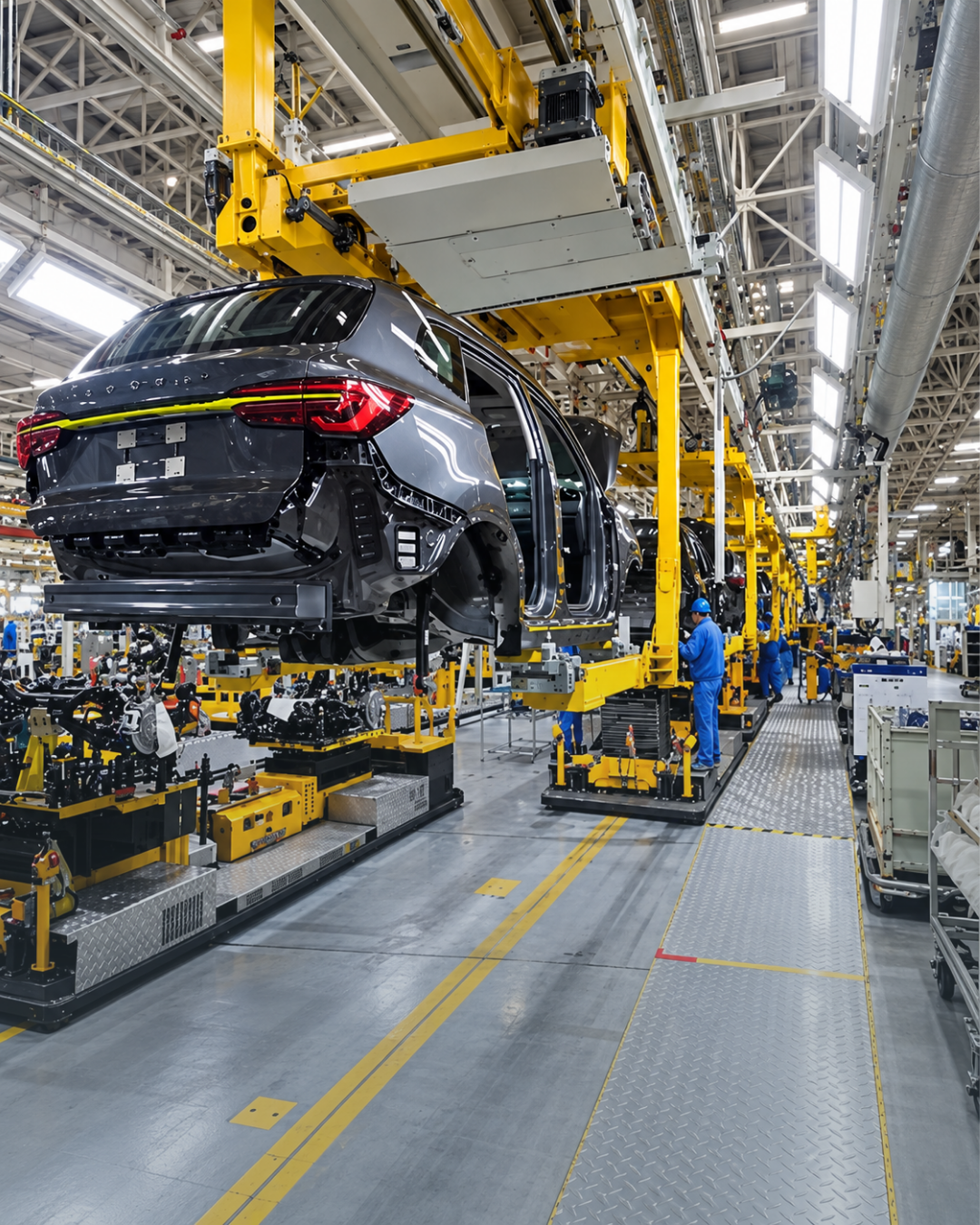
Egypt has signed two major agreements with Chinese companies aimed at expanding local automotive manufacturing, including a planned $2 billion integrated tire production complex expected to create more than 5,000 jobs.
The memoranda of understanding were signed on September 3, 2026, in the presence of Prime Minister Mostafa Madbouly, as Egypt moves to attract automotive investment, localize production technology and strengthen domestic supply chains.
The agreements came immediately after Chinese President Xi Jinping’s September 1–2 state visit to Egypt, during which Cairo and Beijing pledged to deepen cooperation in industry, technology transfer and investment.
Linglong Plans $2 Billion Tire Manufacturing Complex in Egypt
The largest of the two projects is a memorandum of understanding between Egypt’s Ministry of Industry and Chinese tire manufacturer Linglong Group.
Under the agreement, Linglong plans to establish an integrated industrial complex in Egypt producing tires for:
- passenger cars;
- buses;
- industrial equipment; and
- conveyor systems.
The project is expected to attract approximately $2 billion in investment and generate more than 5,000 employment opportunities, according to Industry Minister Khaled Hashem.
Rather than operating only as a tire assembly facility, the complex is planned as a broader manufacturing ecosystem.
It will include supporting industries producing important inputs such as carbon black and steel cords, allowing more components of the tire production process to take place locally.
Egypt Wants to Build a Complete Tire Manufacturing Supply Chain
The government says the Linglong project fits into its strategy of increasing the proportion of locally manufactured components used in Egyptian industry.
By producing raw materials and components alongside finished tires, authorities hope to build a more integrated domestic value chain rather than relying heavily on imported inputs.
Egypt currently imports millions of tires annually, with tire imports estimated at nearly 8 million units worth around $1.25 billion a year, according to industry figures reported following the agreement.
Expanding local production could therefore help reduce import dependence while creating capacity for exports.
Tires Made in Egypt Could Be Exported to Europe and the US
The planned Linglong complex is not intended solely for Egypt’s domestic market.
Industry Minister Khaled Hashem said production will also target European and US export markets.
The government expects the project to increase the local added value of Egyptian manufacturing while helping domestically produced automotive components compete internationally.
Technology transfer is another major part of the agreement.
The project is expected to introduce manufacturing expertise and technical know-how while developing local engineering and production skills.
Second Chinese Agreement Targets Entire Automotive Factories
A second memorandum signed on the same day takes a broader approach to Egypt’s automotive sector.
The agreement brings together the Ministry of Industry, the Sovereign Fund of Egypt and Jiangsu Changhong Intelligent Equipment Co., in cooperation with FIDIA Automotive Engineering Systems S.R.L.
The project aims to establish a specialized industrial and engineering base capable of planning and developing automotive and transportation manufacturing plants in Egypt.
Rather than focusing on one vehicle brand, the platform would provide capabilities needed to design, engineer and equip factories.
It will also support the manufacturing and assembly of smart production equipment, giving Egypt additional local capabilities in the technology required to operate modern automotive plants.
No investment value for this second project was announced alongside the MoU.
Why the Second Agreement Could Be Important
Building vehicles locally requires much more than simply assembling imported parts.
Automotive manufacturers depend on factory-design expertise, robotic production systems, tooling, manufacturing equipment and specialized engineering services.
Developing those capabilities inside Egypt could make it easier for future automakers to establish production facilities without importing every element of their factory infrastructure.
Investment and Foreign Trade Minister Mohamed Farid said attracting international companies with advanced supply chains can support technology transfer, increase local production, reduce pressure on foreign currency resources and strengthen exports.
The government believes the new platform could therefore help attract additional automotive investment beyond the two agreements already announced.
Egypt Is Increasing Cooperation With Chinese Auto Companies
The September agreements are part of a broader expansion in automotive cooperation between Egypt and Chinese manufacturers.
In June 2026, Egypt’s state-owned Nasr Automotive Manufacturing Company signed a strategic partnership with China’s FAW Group to manufacture vehicles under the Nasr brand in Egypt.
Days before the Linglong agreement, Egypt also saw another automotive-related Chinese investment proposal.
On September 2, Mansour Group and China’s Tianneng Battery Group signed an MoU to explore battery manufacturing and energy-storage investments in Egypt.
The study covers both traditional lead-acid automotive batteries and lithium batteries for new-energy vehicles.
Together, the projects cover several different parts of the automotive supply chain — vehicles, tires, batteries, manufacturing equipment and factory engineering.
Xi Jinping’s Egypt Visit Puts Industry in Focus
The latest agreements followed Chinese President Xi Jinping’s state visit to Cairo on September 1 and 2, marking 70 years of diplomatic relations between Egypt and China.
During talks with Xi, President Abdel Fattah El-Sisi identified industrial localization and technology transfer as priorities in the two countries’ growing economic partnership.
The two governments also agreed to continue expanding their comprehensive strategic partnership, with manufacturing and industrial investment among the areas highlighted for future cooperation.
The visit also included agreement on a new phase of expansion for the China-Egypt industrial zone in the Suez Canal Economic Zone, adding to efforts to attract more Chinese manufacturing operations to Egypt.
Egypt Pushes to Become a Regional Automotive Manufacturing Hub
Egypt has increasingly positioned automotive manufacturing as one of the industries it wants to localize rather than relying primarily on imported finished products and components.
The strategy involves attracting international manufacturers, increasing local component production, developing skilled workers and creating manufacturing capacity capable of serving both Egypt and nearby export markets.
The Linglong project is particularly significant because of its scale.
A $2 billion integrated manufacturing complex and more than 5,000 planned jobs would represent a major addition to Egypt’s automotive components industry if the project moves from the MoU stage into full implementation.
At the same time, the second agreement could provide infrastructure and technical expertise needed to support future vehicle-manufacturing projects.
Together, the two MoUs reflect Egypt’s broader goal of moving beyond vehicle assembly toward a more complete automotive industrial ecosystem covering components, production technology, engineering and exports.