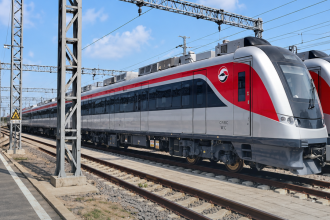
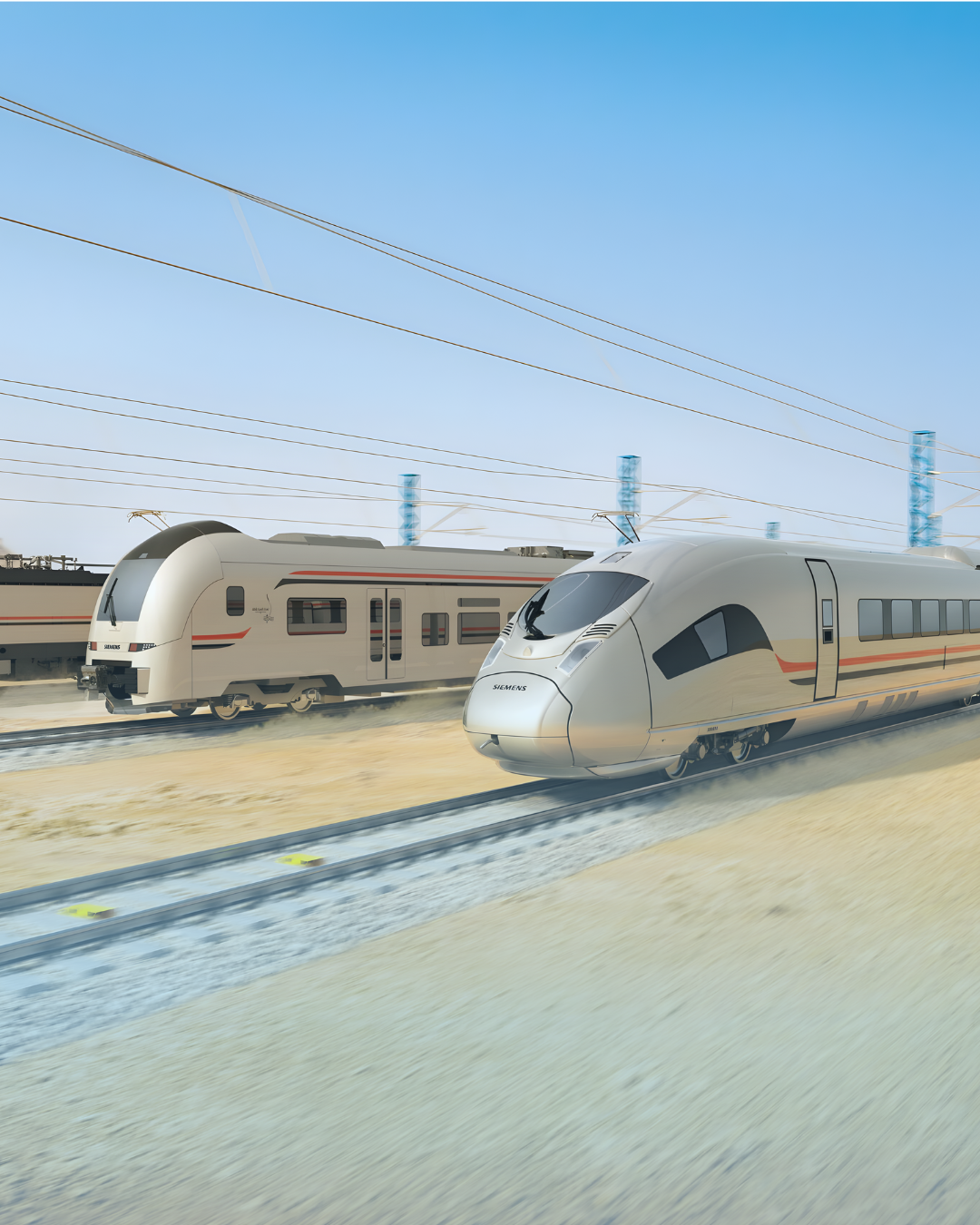
February 25 — Cairo: Egypt’s first high-speed electric railway will create a direct land connection between the Red Sea and the Mediterranean, a project described by officials as a “Suez Canal on rails,” according to Transport Minister Kamel El-Wazir.
During an inspection visit to the project’s first railway line, which will connect Ain Sokhna, El Alamein, and Matrouh, El-Wazir reviewed construction progress at the October Gardens workshop. The facility covers an area of 578 acres and is considered one of the largest train operation and maintenance centers in the region, according to the Ministry of Transport.
Construction of the workshop is being carried out by two separate consortia. One partnership between Orascom and Al Rowad is responsible for civil engineering, architectural construction, and infrastructure work. Meanwhile, a second consortium including Siemens, Orascom, and Arab Contractors is handling railway systems, including track installation, signalling, electrical supply, and control technologies.
The complex includes 46 buildings, including a heavy maintenance facility covering 67,000 square meters, as well as a control center described by officials as one of the largest of its kind in Africa and the Middle East. The workshop will have the capacity to store up to 50 trains and locomotives and will serve as the central hub for operating and maintaining all three planned high-speed rail lines.
According to the National Authority for Tunnels, significant progress has been made in track installation, with 88.3 kilometers completed in the East Nile sector, 18 kilometers in the West Nile sector, and 27 kilometers in the northern section. Parts of the route have already been handed over to the Siemens-led consortium to begin ballast placement and installation of overhead electrical infrastructure.
El-Wazir, accompanied by Deputy Minister for Electric Traction Wagdi Radwan and National Authority for Tunnels Chairman Tarek Goweili, also reviewed work on railway stations and passenger management systems. He instructed construction teams to continue work around the clock to ensure timely completion and maintain quality standards, highlighting the workshop’s importance in ensuring safe and efficient railway operations.
The Ministry of Transport stated that the project forms part of Egypt’s broader transition toward environmentally sustainable transportation, in line with the National Climate Strategy and Egypt Vision 2030.
El-Wazir added that the railway network is expected to improve logistics efficiency, strengthen supply chains, attract new investment, and support urban expansion by connecting emerging cities with existing economic centers.