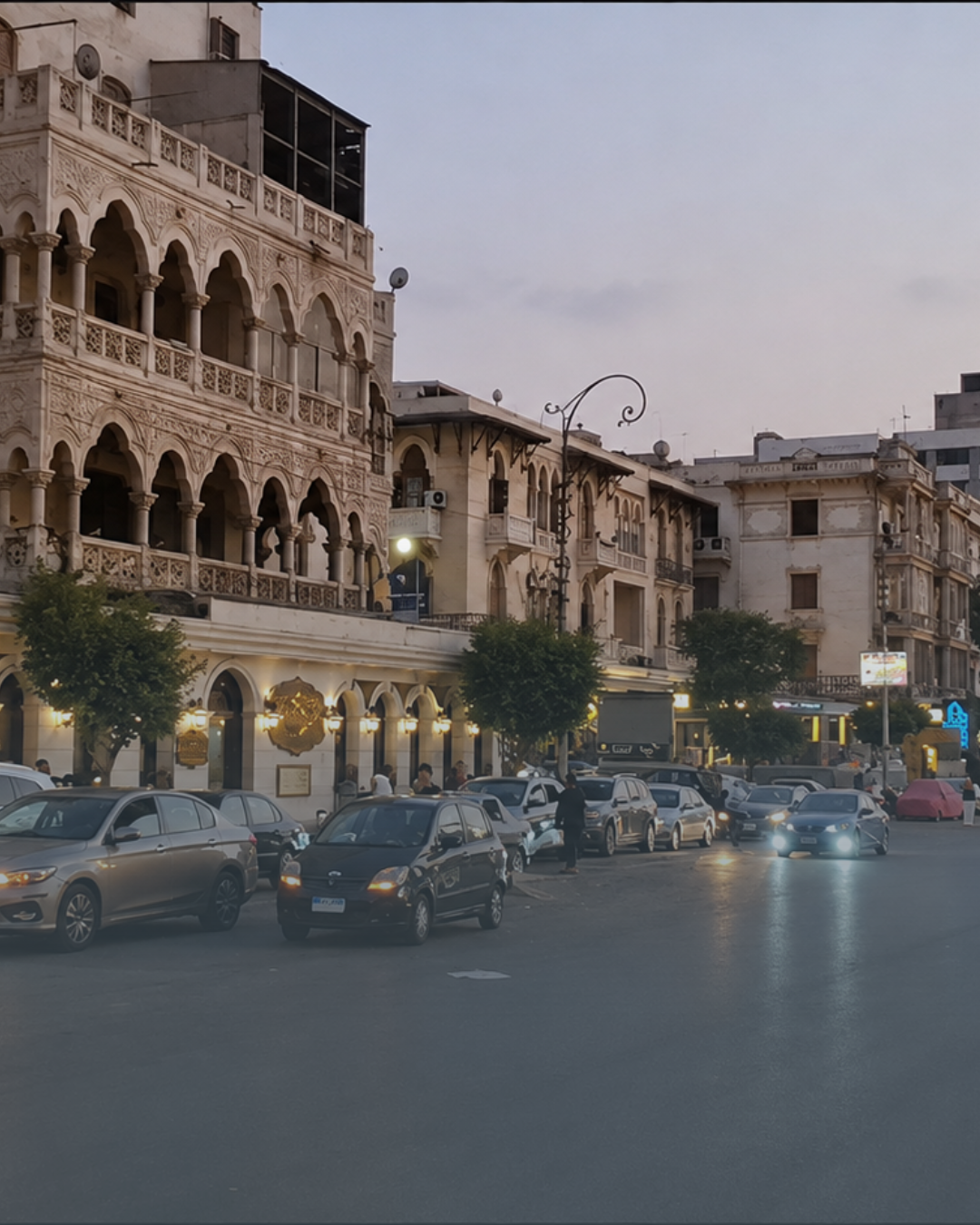
A major redevelopment project is underway in Korba, Heliopolis, where part of Ibrahim Pasha Street is being transformed into a pedestrian-only corridor as part of a wider plan to preserve the area’s historic character while creating a more walkable public space.
The project covers around 300 metres of Ibrahim Pasha Street, connecting Al-Ahram Street and Baghdad Street, and comes with an estimated cost of EGP 20 million. Work officially began in August 2026, with the upgraded street expected to open around the New Year 2027 celebrations.
Vehicle Access Is Being Reduced
As part of the redevelopment, vehicle movement has already been restricted in parts of Korba.
The entrance to Korba Square from Al-Ahram Street has been closed to cars, while Ibrahim Pasha Street has also been closed in the direction leading toward Baghdad Street. These traffic changes are part of the broader plan to gradually give pedestrians more space across the historic district.
Once the work is completed, the redeveloped section of Ibrahim Pasha Street is planned to operate as a pedestrian-only zone rather than simply being temporarily closed for construction.
What Will Change on Ibrahim Pasha Street?
The project involves more than removing cars from the street.
Plans include new paving, wider pedestrian areas, bicycle lanes, landscaping and green spaces, upgraded lighting, public seating and an open area for restaurants and cafés. Utilities including electricity, water, gas and telecommunications infrastructure are also being renewed as part of the work.
The redevelopment will also include work on 13 building façades, helping preserve the architectural identity that makes Korba one of Heliopolis’ most distinctive neighbourhoods.
Preserving Korba’s Historic Character
Korba is known for its arcaded buildings, distinctive façades and urban design dating back to the early development of Heliopolis.
Cairo Governorate describes Korba Square as one of the architectural landmarks of the district, with its triangular layout and buildings linked to the original planning of Heliopolis under Baron Empain.
Officials say the pedestrianisation project is intended to improve the visitor experience without losing that historic identity.
The new design aims to make the area easier to explore on foot while preserving the architecture and character that have long made Korba a popular destination for cafés, restaurants, shops and walks.
Part of a Wider Korba Redevelopment
The Ibrahim Pasha Street project is not the first phase of work in the area.
A previous stage saw the façades of 64 commercial properties in Korba renovated through cooperation between government authorities, local businesses and the surrounding community.
The current phase builds on that work by shifting attention from individual façades to the street itself, including public space, infrastructure and pedestrian movement.
The redevelopment is being coordinated between the Ministry of Local Development and Environment, Cairo Governorate and other state authorities.
Why Make Korba More Pedestrian-Friendly?
Officials say the goal is to reduce vehicle congestion, improve the urban environment and make the historic district more comfortable for residents and visitors.
With fewer cars moving through the core area, the project could create more room for walking, cycling, outdoor seating and commercial activity.
That could also change how people experience Korba, shifting it from a neighbourhood people primarily drive through into a destination designed to be explored on foot.
When Will the New Walkway Open?
According to the Ministry of Local Development and Environment, the development of Ibrahim Pasha Street is scheduled to be completed in time for New Year 2027.
Until then, motorists should expect traffic restrictions around parts of Korba while construction continues.
Once finished, the project will give one of Heliopolis’ most recognizable streets a very different identity: fewer cars, more walking space and a renewed focus on Korba’s historic architecture, cafés and street life.