February 8 — Dubai: Egypt’s Haya Karima initiative has been awarded the Dubai International Best Practice Award for Sustainable Development in the Urban Infrastructure Planning and Management category. The announcement was made during the World Governments Summit 2026, which took place in Dubai from February 3 to February 5.
The award is presented jointly by Dubai Municipality and UN-Habitat and recognizes outstanding global initiatives that have made significant contributions to sustainable urban development. It aims to promote innovation and highlight successful projects addressing major social, economic, and environmental challenges, in line with the United Nations Sustainable Development Goals.
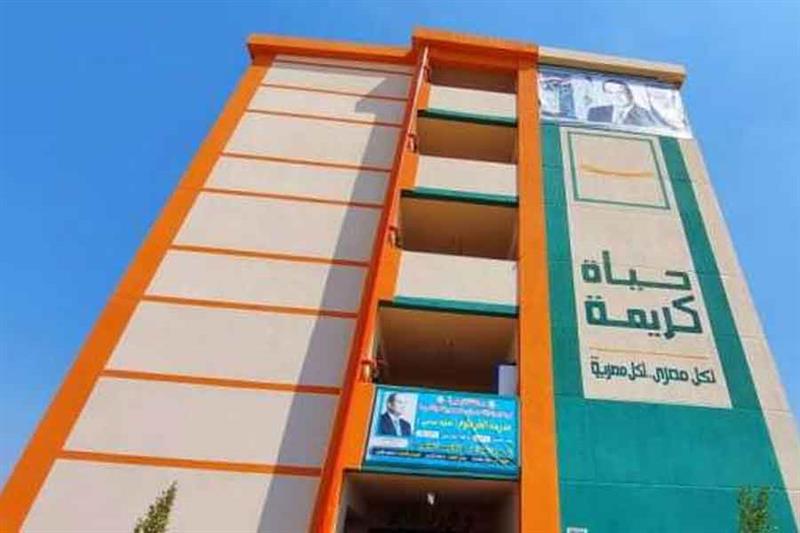
Haya Karima, a nationwide development program launched in July 2021 by President Abdel Fattah El-Sisi, focuses on improving living conditions for more than 60 million Egyptians residing in the country’s most underserved rural communities. The initiative represents a key component of Egypt’s Vision 2030 strategy.
The program provides essential infrastructure, including water and electricity networks, roads, and fiber-optic communications, along with community services such as schools, healthcare facilities, and housing. It covers more than 4,500 villages across 20 governorates nationwide.
To ensure that support reaches the most vulnerable communities first, the initiative is being implemented in three phases. The first phase focused on villages where poverty rates exceed 70 percent, followed by villages with poverty levels between 50 and 70 percent, and finally those with poverty rates below 50 percent.
During the first phase alone, development work was carried out in 1,477 villages, delivering approximately 27,300 infrastructure and service projects and benefiting around 20 million residents in some of Egypt’s most disadvantaged areas.
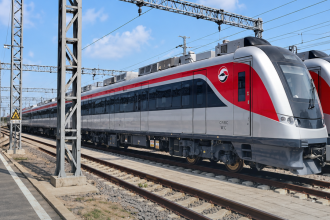
Major projects completed under the initiative include the construction and rehabilitation of 4,000 kilometers of roads across 166 transport corridors connecting rural and urban areas, as well as upgrades to 116 railway stations.
The initiative also introduced extensive water and sanitation infrastructure, including more than 16,000 kilometers of water supply pipelines, over 450 water treatment plants, more than 22,000 kilometers of sewage networks, and 170 sewage treatment facilities. In addition, over 5,000 kilometers of irrigation canals were improved.
Education and youth services were expanded through the development of 2,300 educational institutions and 925 youth centers. Healthcare infrastructure improvements included the construction and upgrading of 685 health units and 365 ambulance stations.
The program also expanded natural gas services to 1,000 villages, modernized electricity networks across 1,477 villages, and introduced advanced telecommunications systems and fiber-optic connectivity.
Beyond infrastructure development, the initiative has also contributed to job creation, supported local industries, and improved economic opportunities for vulnerable populations.
Haya Karima is implemented under the leadership of the Ministry of Housing, Utilities and Urban Communities, in cooperation with the Engineering Authority of the Ministry of Defense and the Ministry of Planning and Economic Development. The project is supported by various regulatory bodies, implementation agencies, and public and private sector partners.
Dar Egypt serves as the project manager for the initiative, overseeing its execution to ensure that development goals are achieved on schedule, within budget, and according to established quality standards.