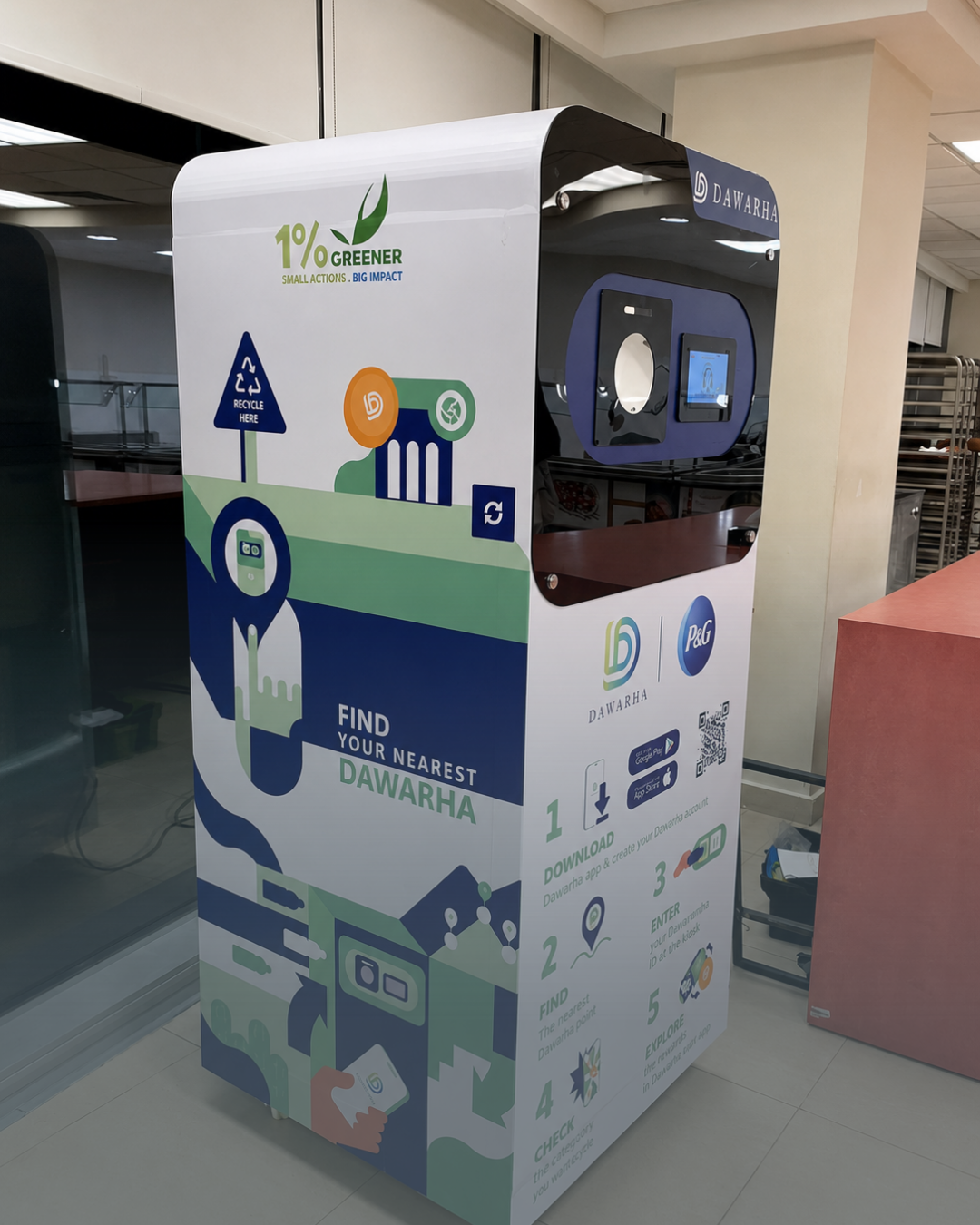
Dokki has begun testing a new smart recycling system that rewards residents for returning empty plastic bottles and aluminum cans, as Giza Governorate expands its use of technology to improve waste collection and encourage recycling.
The new Can Bank machines are currently operating on a trial basis along Tahrir Street, giving residents the chance to exchange recyclable containers for points that can eventually be converted into money or mobile credit.
How the Can Bank Machines Work
Residents place empty plastic bottles or cans into the machine, which identifies the type and size of the container and automatically adds points to the user’s total.
Under the current system, a small plastic bottle earns one point, while larger plastic bottles and aluminum cans earn two points each. Once users reach 100 points, they can receive the equivalent of EGP 10, either as cash or mobile credit depending on the system’s operating mechanism.
The idea is to give recyclable waste a direct value while encouraging people to dispose of bottles and cans through designated collection points rather than mixing them with household rubbish.
Where Are the Machines Located?
The pilot program currently includes two machines on Tahrir Street in Dokki. One is located near Galaa Square, outside Faisal Islamic Bank, while the second is approximately 200 meters away.
Giza officials are monitoring how residents use the machines before deciding how widely the initiative should be expanded.
Early Response Exceeds Expectations
The trial appears to have attracted encouraging interest so far. Giza Governorate spokesperson Mohamed Marei said on August 30 that public participation had been reasonable and had exceeded expectations, despite only two machines being installed during the initial phase.
Officials have indicated that the experience will be evaluated before similar machines are gradually introduced in additional locations.
Part of a Wider Waste-Management Upgrade
The Can Bank initiative is not Dokki’s only recent attempt to modernize waste collection. The district has also been expanding its network of underground hydraulic garbage containers, which are designed to reduce visible rubbish, odors and interference with waste bags on the street.
Together, the projects form part of a broader effort to improve cleanliness in the neighborhood while introducing more organized and technology-driven approaches to waste disposal.
Could the Idea Expand Beyond Dokki?
For now, the Can Bank machines remain a pilot project, meaning a wider rollout will depend on their performance and public response.
If the experiment continues to attract users, the system could offer a simple model for encouraging recycling elsewhere in Giza: residents dispose of recyclable waste more responsibly, while receiving a small financial incentive in return.
For Dokki, the machines represent a small but visible shift toward making recycling part of everyday life rather than simply another step in the waste-disposal process.