Egypt is preparing to make facial biometric verification mandatory for activating new mobile SIM cards, as the National Telecommunications Regulatory Authority (NTRA) moves to tighten identity checks and prevent mobile lines from being registered in citizens’ names without their knowledge.
The new system is expected to be fully implemented within one month, following a wave of complaints over unauthorized SIM registrations. Around 4,000 complaints were reported in connection with lines registered under people’s personal data without their consent.
How the New SIM Verification System Will Work
Under the new process, customers seeking a new SIM card will still need to provide their national ID and complete the standard service contract.
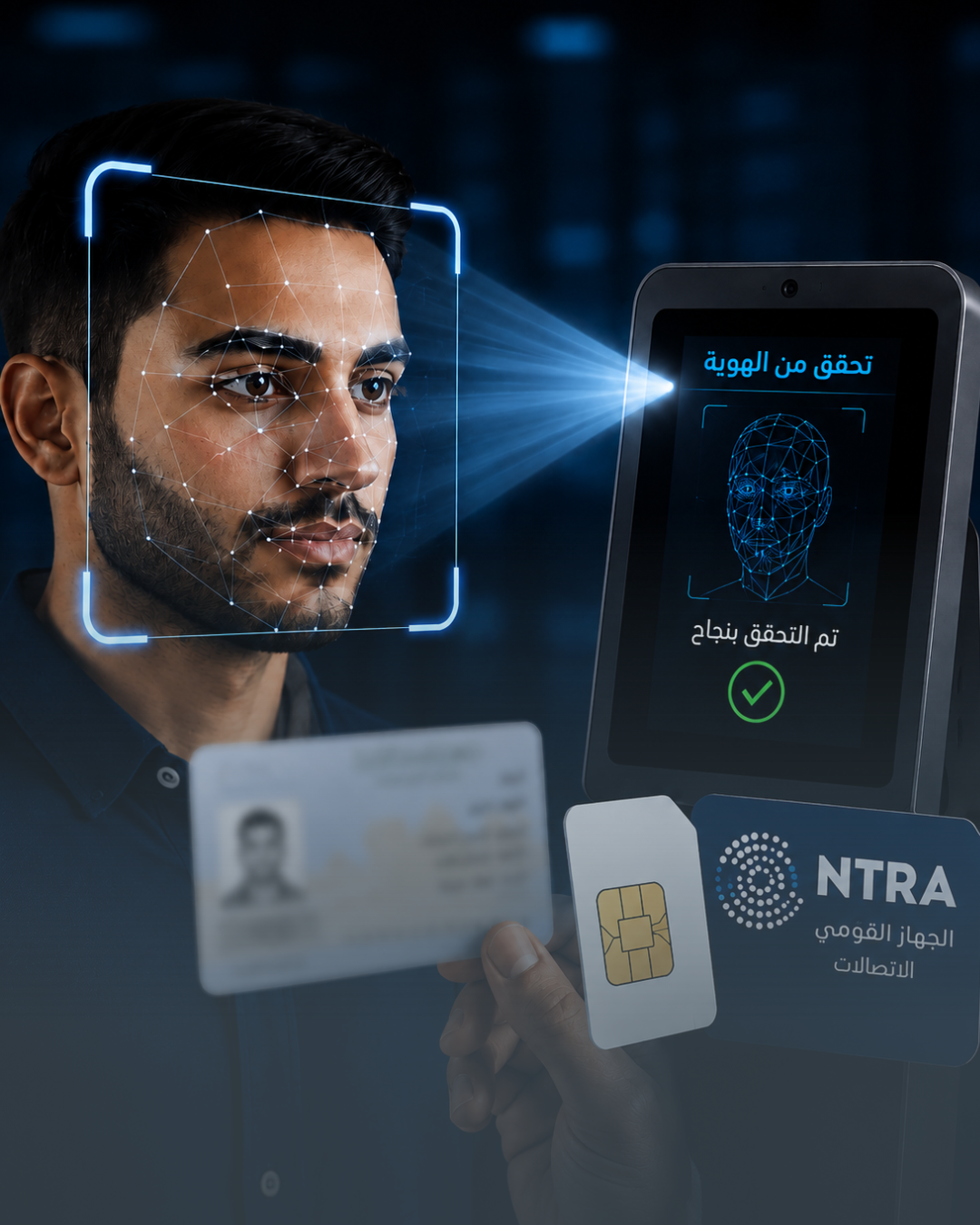
They will then undergo an automated facial verification check. The customer’s face will be scanned and compared with the photograph linked to their national ID. If the match is successful, the operator will be allowed to complete the SIM activation. If the system detects a mismatch, the SIM will not be issued.
The verification process is expected to be available through mobile operators’ apps, meaning users may be able to complete part of the identity check remotely rather than relying entirely on an in-person branch visit.
NTRA Says Operators Will Not Store Biometric Data
One of the main concerns surrounding the new system is how facial data will be handled.
According to the NTRA, mobile operators and their employees will not have access to or store the biometric data used during the verification process. The facial match will be carried out automatically through the technical system, without manual review by branch employees.
The regulator says this approach is intended to strengthen subscriber privacy while reducing the possibility of employees manipulating registration information.
Why Egypt Is Introducing Facial Verification
The move follows repeated complaints from citizens who discovered mobile numbers registered under their identities even though they had never purchased or possessed those SIM cards.
The issue gained wider attention after NTRA referred violations involving Egypt’s mobile operators to the Public Prosecution and introduced additional measures aimed at reorganizing subscriber registration.
The regulator believes biometric verification will provide a stronger link between the identity listed in the registration system and the person actually requesting the mobile service.
Existing SIM Cards Are Also Being Reviewed
The changes are not limited to new SIM cards.
Mobile operators have also been instructed to contact users whose existing lines require updated registration and ask them to complete new contracts under the name of the actual person using the line.
Subscribers who receive such requests and fail to complete the verification process within the required timeframe could eventually have their lines deactivated.
NTRA is also updating its My Numbers service, which allows citizens to check which mobile lines are registered under their national ID and report unfamiliar numbers.
Remote Verification for Egyptians Abroad
The new system is also expected to offer solutions for Egyptians living outside the country.
Reports indicate that users abroad may be able to complete verification remotely once the digital system becomes operational, or handle certain procedures through a representative in Egypt with valid authorization.
More detailed instructions are expected as the rollout approaches.
A Major Change to Egypt’s SIM Registration Rules
Once implemented, facial verification will represent one of the biggest changes to Egypt’s mobile registration process in recent years.
For consumers, the main difference will be an additional biometric identity check before a new SIM can be activated. For telecom companies, it introduces a stricter verification layer designed to prevent unauthorized registrations and improve accountability.
Testing is already underway, and NTRA expects the new system to become operational within the coming month.
The goal is straightforward: make it significantly harder for anyone to obtain a mobile line using another person’s identity without their knowledge.