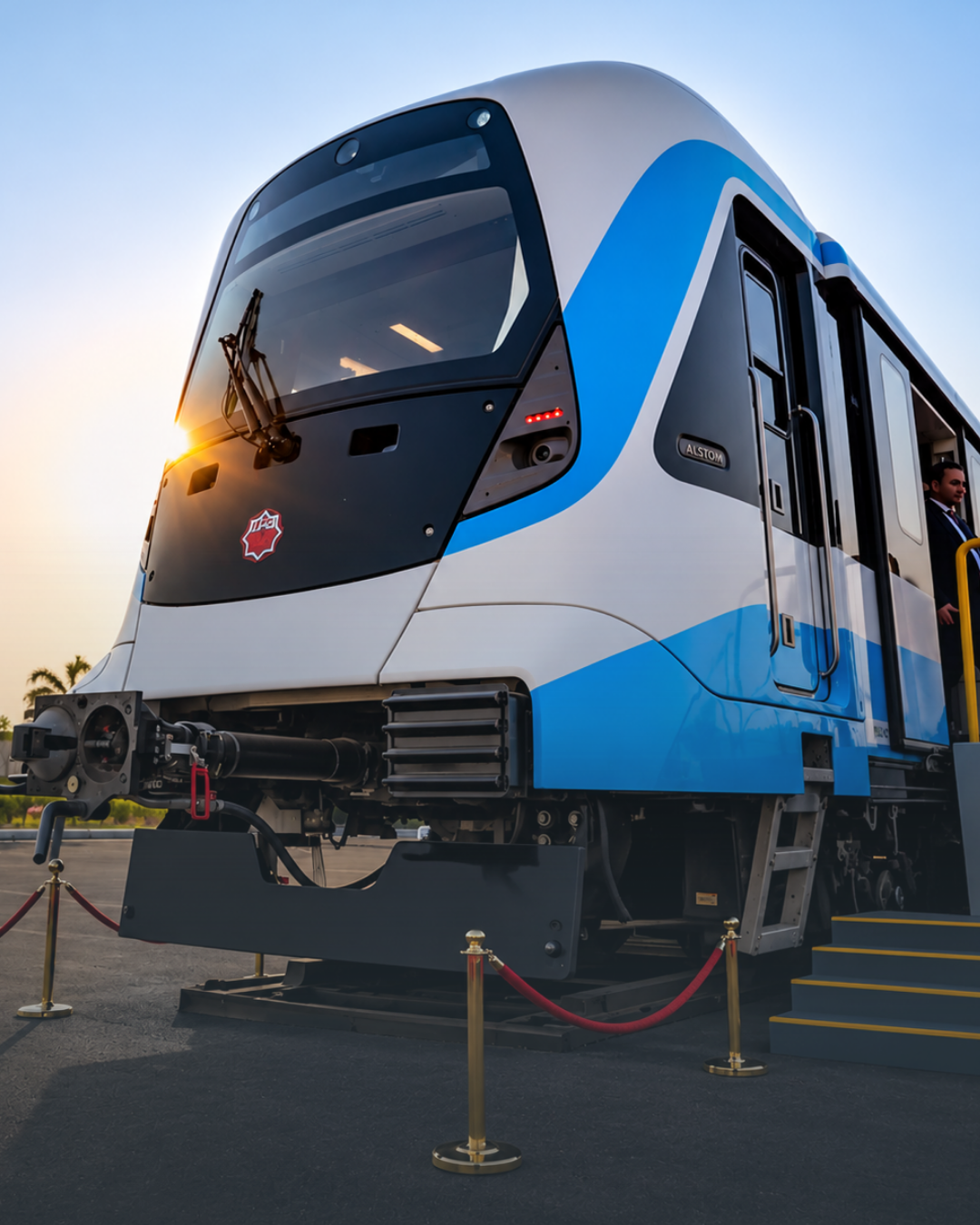
Cairo Metro has officially introduced its first two new Alstom Metropolis trains into passenger service on Line 1, marking a major step in modernizing Egypt’s oldest underground railway.
The new air-conditioned trains began operating on November 15, 2026, along the Helwan–New El Marg route, bringing upgraded passenger facilities, improved accessibility, and modern safety systems to one of Cairo’s busiest transportation corridors.
The launch forms part of a €876 million agreement with French railway manufacturer Alstom to supply 55 new trains and provide long-term maintenance services.
Cairo Metro Introduces First Two Alstom Metropolis Trains
Egypt’s Ministry of Transport has confirmed the introduction of the first two Alstom Metropolis trains into commercial service on Cairo Metro Line 1.
Minister of Transport Kamel El Wazir attended the launch and inspected one of the new trains, highlighting the government’s ongoing efforts to improve public transportation.
The newly introduced trains are the first to enter passenger service under a larger agreement involving 55 trainsets, each consisting of nine carriages.
The complete order will provide 495 new air-conditioned carriages for Cairo Metro Line 1.
The project aims to replace aging rolling stock, increase passenger capacity, and improve the reliability of daily metro operations.
What Features Do The New Cairo Metro Trains Offer?
The new Alstom Metropolis trains introduce several improvements designed to make daily commuting more comfortable, accessible, and efficient.
According to Alstom, the trains feature spacious, fully air-conditioned interiors, offering a more comfortable environment during Cairo’s warmer months.
They also include dedicated areas for women and improved accessibility for passengers with reduced mobility.
Real-time passenger information systems provide travel updates, while CCTV cameras and modern safety equipment support passenger security.
The trains have also been designed to improve passenger movement through the carriages, helping accommodate large numbers of commuters during peak travel periods.
Additionally, Alstom states that the trains are 98% recyclable, reflecting the company’s focus on environmentally sustainable transportation.
A €876 Million Agreement To Modernize Cairo Metro
The new trains are part of a €876 million contract signed between Alstom and Egyptian authorities in 2021.
The agreement includes the delivery of 55 Metropolis trains and an eight-year maintenance program.
Long-term maintenance services are intended to improve train availability and operational reliability while reducing the risk of service disruptions.
The Metropolis trains were designed and manufactured at Alstom’s Valenciennes facility in France, specifically to meet the operational requirements of Cairo Metro Line 1.
The project also received financing support from the French Treasury, representing a significant example of cooperation between Egypt and France in transportation infrastructure.
Why Is Cairo Metro Line 1 Being Upgraded?
Cairo Metro Line 1 holds a significant place in the history of public transportation in Egypt.
Opened in 1987, it was the first metro line in Africa and the Middle East.
The route stretches approximately 44 kilometers between Helwan and New El Marg, serving 35 stations across Greater Cairo.
According to Alstom, around 2.5 million passengers use the line daily, making it one of the capital’s most important transportation corridors.
After nearly four decades of operation, upgrading the line’s train fleet has become an important part of Egypt’s efforts to improve public transportation.
The new Metropolis trains are expected to help accommodate increasing passenger demand while improving comfort and operational efficiency.
How Will The New Trains Improve Daily Commuting?
For passengers traveling along Cairo Metro Line 1, the introduction of the new trains is expected to provide a more comfortable and reliable journey.
Air-conditioned interiors will improve passenger comfort, while accessibility features will make traveling easier for people with mobility challenges.
Modern passenger information systems will also help commuters receive clearer travel updates during their journeys.
The introduction of additional trains is intended to support higher passenger capacity and more efficient operations as the fleet expands.
However, the first stage currently involves only two new trains, meaning the full benefits of the modernization program will become more noticeable as additional units enter service.
Alstom’s Role In Egypt’s Transportation Development
Alstom has maintained a presence in Egypt for more than 40 years, contributing to several major railway and transportation projects.
The company has supported the development of rail infrastructure through signaling systems, power supply solutions, railway equipment, and train manufacturing.
According to Alstom, it currently employs approximately 800 people in Egypt and operates specialized engineering and technical teams supporting transportation projects.
The Cairo Metro Line 1 modernization project represents another milestone in the company’s longstanding partnership with Egypt.
Ramy Salah El-Din, Managing Director of Alstom Egypt, welcomed the introduction of the new trains, highlighting the importance of providing modern transportation services to millions of passengers.
What Comes Next For Cairo Metro Line 1?
The launch of the first two Alstom Metropolis trains marks the beginning of a wider fleet modernization program for Cairo Metro Line 1.
Under the existing agreement, a total of 55 new trains will be introduced as part of efforts to improve the line’s capacity, efficiency, and passenger experience.
The project also includes long-term maintenance support intended to ensure the trains remain operational and reliable over the coming years.
As Egypt continues investing in public transportation infrastructure, the introduction of the Metropolis fleet represents another step toward improving daily travel for millions of Cairo residents.
For passengers on the Helwan–New El Marg route, the arrival of the new trains marks the beginning of a new chapter for one of the city’s oldest and busiest metro lines.