Egypt’s Suez Canal Economic Zone is expected to approach 400 operating factories within the next two years, as the country accelerates efforts to turn the strategic area surrounding the Suez Canal into a major industrial and export hub.
Prime Minister Mostafa Madbouly announced that the SCZone currently has 212 factories in operation, while another 176 facilities are under construction and are expected to begin operating progressively over the coming 18 months to two years.
If those projects are completed as planned, the economic zone would have close to 400 operating factories by around 2028.
SCZone Now Has 212 Operating Factories
Madbouly revealed the latest figures during a September 6 visit to the integrated Sokhna industrial zone, where he inaugurated a new group of manufacturing projects.
The 212 factories already operating across the SCZone employ tens of thousands of Egyptian workers, according to the prime minister.
The growth has been particularly rapid over the past four years.
Madbouly said approximately 140 new factories have been established and brought into operation during that period alone.
Four years ago, the number of operational factories represented only around 30% to 35% of today’s total, highlighting how quickly the zone’s industrial base has expanded.
Another 176 Factories Are Under Construction
The next phase of growth is already underway.
A further 176 factories are currently being built, with the government expecting them to be completed successively over the next 18 to 24 months.
Adding those facilities to the 212 already operating would take the total to around 388 factories, effectively bringing the SCZone close to the 400-factory mark.
That makes the target less of a distant proposal and more a reflection of projects already under construction.
Nine New Industrial Projects Worth $84.5 Million Opened
During Madbouly’s latest tour, nine industrial projects worth a combined $84.5 million were inaugurated in the Sokhna industrial area.
The projects include entirely new factories, expansions of existing facilities and initial production phases that are expected to grow further.
Together, they are expected to generate nearly 2,000 new jobs.
The projects cover a wide range of industries, including:
- medical equipment;
- building and finishing materials;
- textiles;
- furniture;
- chemicals;
- mining;
- engineering products;
- artificial turf; and
- electrical and lighting equipment.
The diversity of the projects reflects the government’s broader goal of developing the SCZone as a manufacturing ecosystem rather than concentrating investment in a single industry.
Egypt Pushes for More Local Manufacturing
The expansion forms part of Egypt’s wider economic strategy of localizing industry and increasing domestic production.
Madbouly said the government’s current approach is centered around developing skilled workers, deepening local manufacturing and attracting major international industrial investors.
For Egypt, increasing local manufacturing can serve several objectives at the same time.
Factories producing goods previously imported from abroad can reduce dependence on imports and foreign currency, while export-oriented facilities can generate foreign-currency revenues.
Local production can also help create jobs and bring manufacturing expertise and technology into the Egyptian market.
From Imported Products to Made-in-Egypt Manufacturing
Several factories highlighted during Madbouly’s visit demonstrate that strategy.
One facility is now locally manufacturing dental chairs and equipment that had previously been completely imported.
Another factory producing lighting products has expanded to manufacture goods comparable with products previously produced in Germany, with some production now intended for international markets.
Madbouly also highlighted an operation refurbishing ambulances with modern technology, extending the usable life of vehicles that might otherwise have been retired.
These examples support the government’s argument that the economic zone is moving beyond basic assembly toward more sophisticated industrial production.
Why the Suez Canal Economic Zone Matters
The SCZone’s location gives it a significant logistical advantage.
Industrial areas are connected to Ain Sokhna Port, major road networks and expanding railway infrastructure, allowing manufacturers to move raw materials and finished goods between production facilities and export terminals.
This integration between manufacturing and logistics is central to the SCZone’s development model.
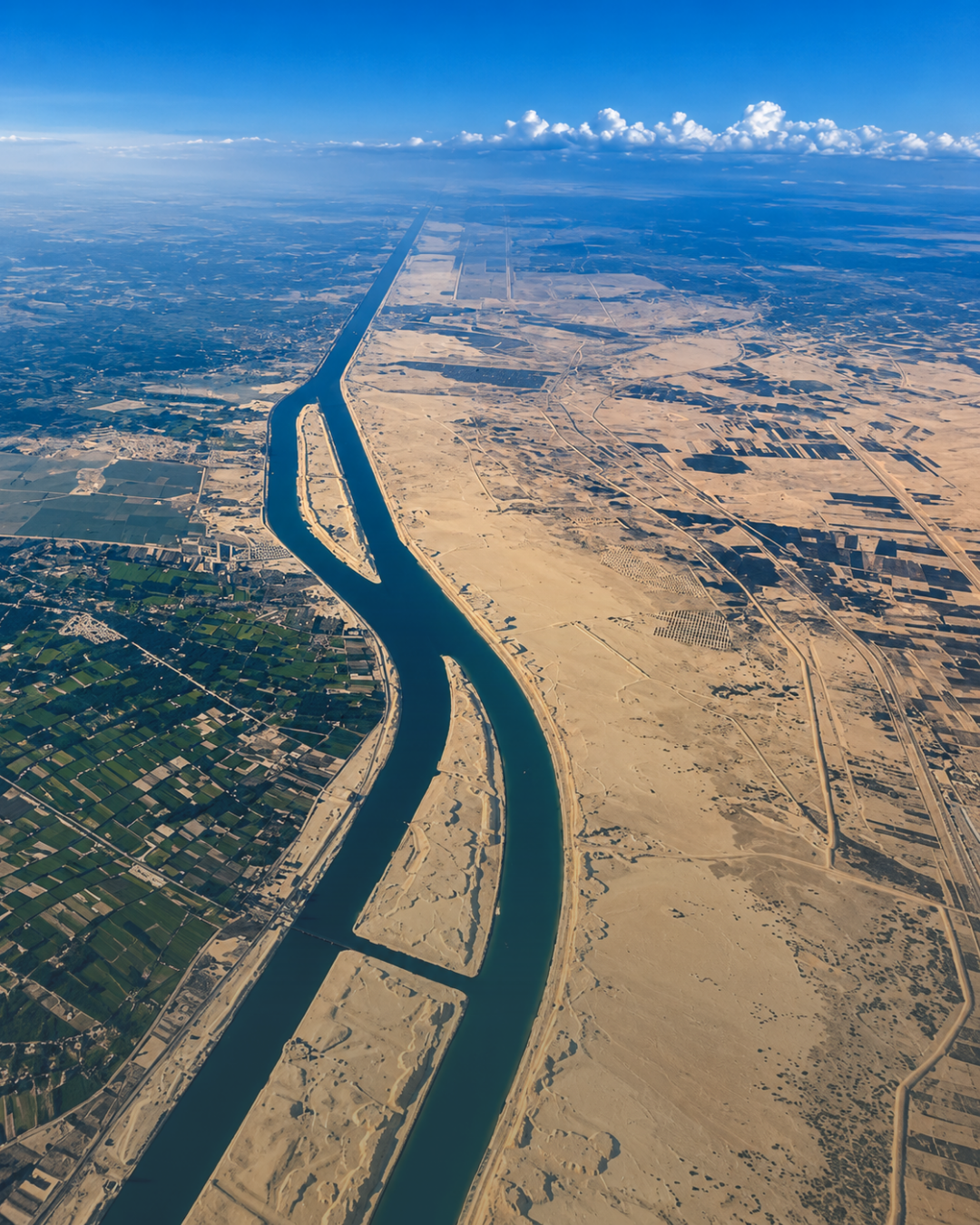
Rather than viewing the Suez Canal solely as a route through which international vessels pass, Egypt wants the surrounding region to become a location where products are manufactured, assembled, stored and exported.
Madbouly described the Suez Canal area as developing into an international industrial and logistics hub, rather than functioning only as a global trade corridor.
Sokhna Is Emerging as a Major Manufacturing Center
The integrated Sokhna zone has become one of the most visible parts of that transformation.
Its proximity to Ain Sokhna Port provides manufacturers with direct access to maritime trade routes linking Asia, Africa, Europe and the Middle East.
The latest nine-project opening was also the second package of nine industrial projects inaugurated in Sokhna during 2026, illustrating the pace at which manufacturing capacity is being added.
Industries being developed in the area increasingly range from traditional manufacturing to specialized medical, engineering and electrical products.
More Factories, More Jobs
Employment is another major reason the government is promoting industrial expansion in the SCZone.
The 212 operating factories already employ tens of thousands of workers, while each new wave of industrial investment adds additional direct and indirect employment opportunities.
The nine newly inaugurated projects alone are expected to create close to 2,000 jobs.
With 176 additional factories currently being constructed, employment across the economic zone could continue growing significantly as those facilities begin production.
The government has therefore emphasized technical and vocational training alongside industrial investment to ensure that workers can meet increasingly specialized manufacturing requirements.
Nearly 400 Factories by Around 2028
The next two years could represent one of the most significant expansion periods in the Suez Canal Economic Zone’s development.
With 212 factories already operating and 176 more under construction, the industrial base is positioned to approach 400 operational facilities by around 2028 if the existing pipeline is completed on schedule.
For Egypt, however, the importance of the expansion goes beyond the factory count.
The broader objective is to use the Suez Canal’s geographic position and transport infrastructure to build a manufacturing platform capable of serving the domestic market while exporting to markets around the world.
If the current projects come online as planned, the SCZone will move significantly closer to that goal — evolving from one of the world’s most important shipping corridors into an increasingly important industrial and logistics center as well.