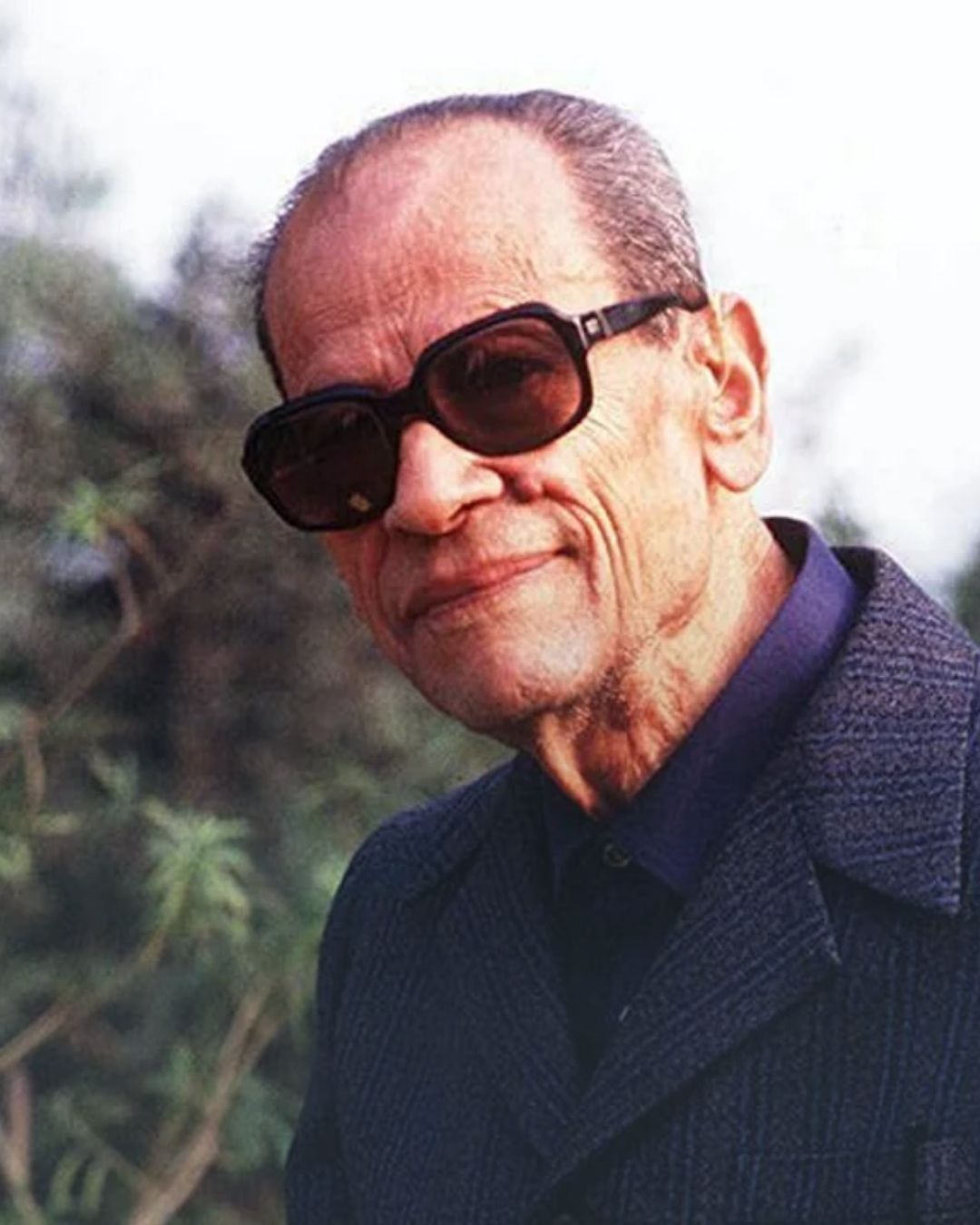
Twenty years after the death of Naguib Mahfouz, Egypt is dedicating an entire year to revisiting the life, literature, cinema and Cairo streets that shaped the legacy of its Nobel Prize-winning writer.
The Naguib Mahfouz Museum and Creativity Centre has officially launched “Mahfouz Year,” a year-long cultural program featuring exhibitions, literary discussions, film screenings, workshops, readings and research initiatives centered around Mahfouz’s work.
The program was launched on August 30, 2026, exactly 20 years after Mahfouz died in Cairo at the age of 94. The opening took place at his museum inside the historic Tekkeyet Mohamed Abu El-Dahab, near Al-Azhar in Islamic Cairo.
‘Mahfouz Year’ Goes Beyond Commemorating His Death
Rather than limiting the anniversary to a single event, organizers are using the occasion to encourage a new reading of Mahfouz’s enormous body of work.
Hamdy El-Sotouhi, Head of the Cultural Development Fund, said the initiative is intended to go beyond commemorating Mahfouz’s passing by creating monthly and seasonal activities, research projects and cultural partnerships.
Plans also include extending activities beyond the museum to schools, governorates and other cultural institutions, giving younger audiences more opportunities to discover Mahfouz.
Journalist Tarek El-Taher, supervisor of the Naguib Mahfouz Museum and Creativity Centre, said the program will explore Mahfouz not only as a novelist, but through his biography, his relationship with Cairo and the extensive connection between his writing and Egyptian cinema.
A Monthly Naguib Mahfouz Salon
One of the main recurring events will be the launch of the Naguib Mahfouz Salon.
Each month, the salon will discuss either one of Mahfouz’s own books or a work written about him, creating an ongoing space for readers and researchers to reassess different parts of his literary career.
A monthly reading club titled “Siret Ketab” will also continue in cooperation with the Cairo-focused cultural initiative Siret Al-Qahira, founded by researcher Abdel Azim Fahmy.
The collaboration aims to explore the relationship between literature and the city that became almost inseparable from Mahfouz’s writing.
Creative Writing, Cinema and AI Workshops
“Mahfouz Year” will also include a series of workshops that move beyond traditional literary discussions.
Among the planned activities is a workshop on cinematic storytelling and creative writing, supervised by screenwriting professor Thanaa Hashem of the Academy of Arts.
Other workshops will explore artificial intelligence and the arts, while an architecture-focused program titled “Doroob Masr” will use the alleys and neighborhoods found throughout Mahfouz’s stories as a starting point for examining contemporary Egyptian architecture.
Children with disabilities will also be included through museum visits followed by specially designed storytelling workshops.
New Exhibitions Explore Different Sides of Naguib Mahfouz
A major part of the year-long celebration will be a series of documentary and visual exhibitions.
The launch included an exhibition titled “Naguib Mahfouz: From the Assassination Attempt to His Passing — A Reading in the Egyptian Press.”
Curated by El-Taher, the exhibition traces how Egyptian newspapers and magazines covered Mahfouz between the 1994 attempt on his life and his death in 2006.
More exhibitions are planned throughout the year.
One, titled “Naguib Mahfouz in the Eyes of the World,” will bring together 100 caricatures of Mahfouz by international artists in collaboration with the Egyptian Caricature Society.
Another exhibition will feature collage works inspired by Mahfouz’s novels and their covers, while a photography exhibition scheduled for December will focus on El-Gamaleya, the historic Cairo neighborhood closely associated with the author’s childhood and literary imagination.
Rare Nobel Prize Documents to Go on Display
One of the most notable exhibitions is expected to open in October.
Titled “Nobel Documents,” it will showcase letters and telegrams received by Mahfouz and the Egyptian government following his historic 1988 Nobel Prize in Literature.
Mahfouz became the first Arab writer to receive the Nobel Prize in Literature when he won the award in 1988.
The Nobel Foundation credited him with creating an Arabian narrative art with universal relevance, bringing his work and modern Arabic literature to an even wider international audience.
Mahfouz’s Cairo Takes Center Stage
Cairo itself will play a major role throughout the program.
Mahfouz spent his life in the Egyptian capital, and its streets, cafés, alleys, families and social transformations became fundamental elements of his writing.
A special program titled “Cairo of Naguib Mahfouz” combines museum visits, cinema and literary readings to explore the city through his eyes. Its launch activities included a film screening and a reading from Mahfouz’s Hekayat Haratna.
Plans are also underway to establish a new Cairo Library within the museum’s cultural center, focusing on the city’s history, arts and architecture.
A New Space Dedicated to Mahfouz the Civil Servant
The museum is also preparing an exhibition space examining a less glamorous but important side of Mahfouz’s life: his decades as a government employee.
A room titled “Naguib Mahfouz: The Employee” will feature reproductions of documents tracing more than 37 years of his professional career in public service.
Mahfouz spent many years working within Egypt’s state cultural institutions while simultaneously developing the literary career that eventually brought him international recognition.
From ‘The Cairo Trilogy’ to Egyptian Cinema
Mahfouz’s influence stretches far beyond books.
His works including Palace Walk, Palace of Desire, Sugar Street, Midaq Alley, Khan El-Khalili and The Beginning and the End became landmarks of modern Arabic literature, while many of his stories were adapted for Egyptian cinema.
That connection between literature and film will be revisited throughout “Mahfouz Year” through screenings, discussions and workshops examining his contribution to Egyptian screen culture.
Organizers have also discussed using newer formats including short-form video, podcasts and comics to introduce Mahfouz to generations who may encounter his work differently from readers of the past.
Keeping Naguib Mahfouz’s Legacy Alive 20 Years Later
Mahfouz died on August 30, 2006, but the worlds he created have remained deeply embedded in Egyptian culture.
Two decades later, “Mahfouz Year” is designed not simply to look backward, but to ask what his novels, characters and ideas can still say about contemporary Egypt.
Through books, cinema, architecture, exhibitions, workshops and the Cairo neighborhoods that inspired him, the year-long program hopes to bring new audiences into Mahfouz’s world while giving longtime readers new reasons to return.
Twenty years after his passing, Naguib Mahfouz is once again at the center of a conversation about Cairo, Egyptian identity and the stories that continue to outlive their author.