
There was a time when jealousy meant he really loves her, endless fighting meant they have chemistry, and giving up your entire career for a relationship somehow counted as a romantic ending.
Egyptian cinema has given us some unforgettable love stories — couples we rooted for, scenes we memorized and endings that once felt completely satisfying. But rewatching some of these movies years later can be a very different experience.
Suddenly, the grand romantic gestures come with red flags. The jealousy looks more like control. The “complicated love story” starts looking suspiciously like emotional chaos.
That doesn’t make these films any less iconic. If anything, it makes revisiting them even more interesting.
From Taymour w Shafika to Sahar El Layaly, here are five Egyptian movies that may have had us confusing toxic love with romance.
1. Taymour w Shafika
If we had a pound for every time Taymour’s jealousy was presented as proof of how deeply he loved Shafika, we would probably be doing very well.
Released in 2007, Taymour w Shafika stars Ahmed El Sakka and Mona Zaki as childhood neighbors whose lifelong friendship eventually develops into love.
On paper? Adorable.
In practice? Taymour spends a significant part of their relationship trying to control Shafika.
His jealousy affects who she can spend time with, what she wears and how independent she is. Even before they marry, Shafika openly pushes back against his desire to behave like the stereotypical controlling “Si El Sayed.”
And then comes her career.
Shafika is highly educated, earns a doctorate and eventually becomes a government minister — an enormous achievement. Taymour, meanwhile, struggles with the fact that the woman he loves has become professionally more powerful than him.
When they consider marriage, he wants her to give up her ministerial position. She initially refuses, choosing the career she worked for rather than accepting his conditions.
Fair enough.
Except the movie ultimately ends with Shafika leaving that prestigious position and marrying Taymour.
When we were younger, it was easy to see the ending as: Love wins.
Watching it now, another interpretation immediately appears:
Why exactly did Shafika have to lose for their relationship to work?
The chemistry between Ahmed El Sakka and Mona Zaki remains undeniable, and Taymour does have genuinely heroic moments. But intense jealousy, possessiveness and asking someone to shrink their ambitions for you?
Maybe not quite the love language we thought it was.

2. Omar w Salma
Few Egyptian rom-com couples defined the 2000s quite like Omar and Salma.
Tamer Hosny and Mai Ezz El Din had the songs. They had the chemistry. They had the dramatic arguments followed by equally dramatic reconciliations.
They also had enough relationship problems to sustain three entire movies.
The first Omar w Salma introduces Omar as a wealthy university student with a long history of casual relationships. After meeting Salma, he falls for her — but falling in love does not immediately mean giving up his old behavior. The film specifically establishes that Omar continues his relationships with other women even while trying to win Salma over.
That becomes especially uncomfortable because Salma has already been badly hurt by relationships.
Her former fiancé was controlling and physically abusive, and after experiencing betrayal, she explicitly tells Omar that cheating is the one thing she cannot tolerate. Omar promises her loyalty.
Naturally, chaos follows.
And the franchise doesn’t exactly become healthier after they get married.
In Omar w Salma 2, marital problems eventually lead Omar back toward flirtations and other women, while much of the conflict is framed around Salma supposedly no longer paying enough attention to her appearance or husband after becoming a mother.
By the third film, jealousy, manipulation and deliberately trying to make each other jealous have practically become part of Omar and Salma’s communication style.
And yet we kept rooting for them.
Partly because Tamer and Mai made Omar and Salma incredibly lovable, and partly because the franchise convinced an entire generation that if two people fight that passionately, they must be meant for each other.
Maybe.
Or maybe they just needed couples therapy.

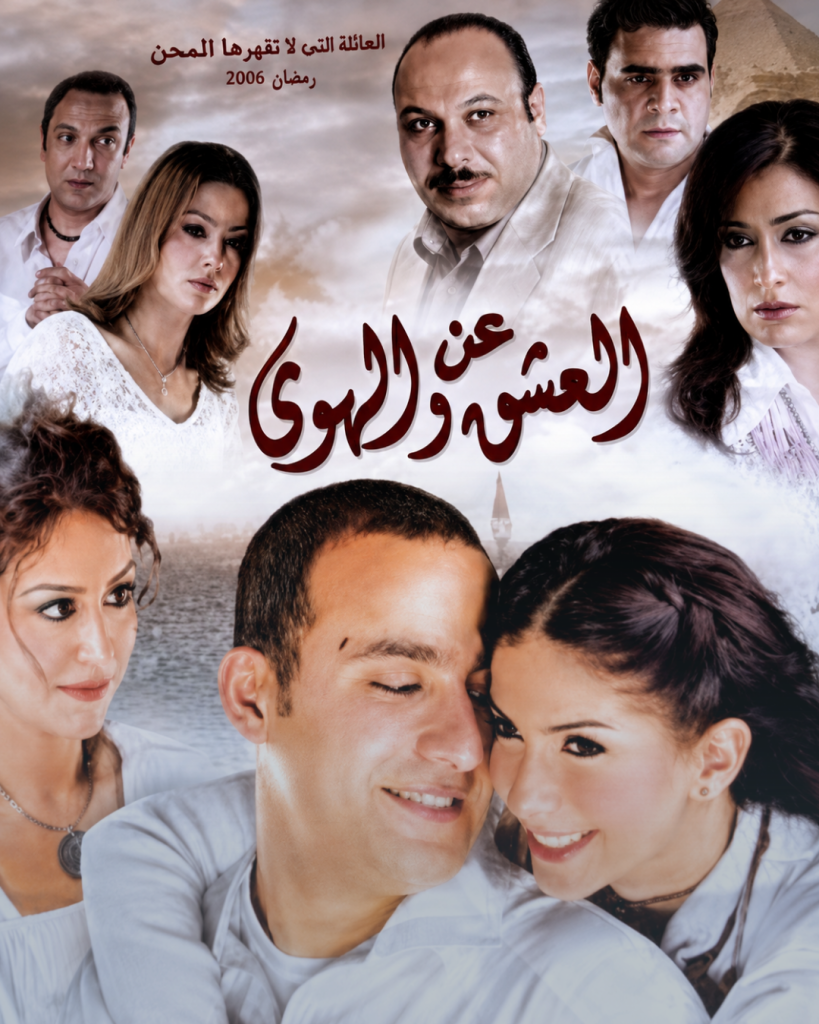
3. 3an El 3ashq w El Hawa
3an El 3ashq w El Hawa is a little different because the movie itself seems to know that love can be irrational, selfish and deeply messy.
Released in 2006 and directed by Kamla Abu Zekry, the film follows several interconnected relationships, but the central heartbreak belongs to Omar and Alia, played by Ahmed El Sakka and Mona Zaki.
Omar loves Alia and intends to marry her.
Then he discovers that Alia’s sister works at a bar and has what he considers a bad reputation.
So what does Omar do?
He doesn’t judge Alia based on who she is. He walks away from the woman he supposedly loves because of her sister’s life.
He eventually marries Kismat, while Alia marries a childhood neighbor who has always loved her. Neither marriage gives them the happiness they expected.
And that’s where everything becomes complicated.
Omar and Alia remain emotionally connected while married to other people, meaning their great unfinished love comes at the expense of spouses who entered marriages without fully knowing that they would always be competing with someone from the past.
Romantic?
Absolutely, if you’re watching the lingering looks and heartbreak.
Healthy?
That’s a tougher argument.
Omar essentially allows social judgment to destroy his relationship, then carries his unresolved feelings into another marriage.
The film is filled with characters trying to understand whether love alone is actually enough to build a life with someone — and usually discovering that it isn’t. A contemporary review of the film even described its characters as people who don’t fully understand love but continually try to figure it out.
So unlike some entries on this list, 3an El 3ashq w El Hawa arguably isn’t telling us these relationships are healthy.
It’s showing us just how much damage people can cause when they mistake wanting someone for knowing how to love them.
4. Enta Omry
This one had everything required to destroy us emotionally.
Terminal illness. Impossible love. Sacrifice. Nelly Karim dancing ballet. Hany Salama looking heartbroken.
How were we supposed to notice the enormous relationship problem sitting in the middle of it?
In Enta Omry, Youssef, played by Hany Salama, is happily married to Hend, played by Menna Shalaby, and they have a young son.
After discovering that he has leukemia, Youssef makes the huge decision not to tell his wife. Instead, he tells his family he is travelling abroad and secretly goes to Cairo for treatment.
While receiving treatment, he meets Shams, played by Nelly Karim, a ballerina battling the same disease.
Their shared fear, pain and determination bring them closer, and they eventually fall in love.
Except Youssef is still married.
And Shams knows that.
Hend eventually discovers not only that her husband lied about where he was and hid a potentially fatal illness from her, but also that he has fallen in love with someone else.
The movie then takes the emotional dilemma even further by suggesting that Youssef and Shams’ love gives them the psychological strength to respond to treatment — placing Hend in the extraordinary position of being encouraged to accept their emotional relationship because separating them could harm their health.
As tragic cinema? Extremely effective.
As relationship advice?
Please don’t.
The film wraps betrayal, secrecy and an emotional affair inside such heartbreaking circumstances that audiences are almost invited to forget that Hend is experiencing several devastating discoveries at once.
We cried for Youssef and Shams.
Rewatching it now, we might owe Hend an apology too.

5. Sahar El Layaly
If the other films gave us one complicated couple, Sahar El Layaly basically said: Why stop there?
The 2003 classic follows four male friends and the women in their lives, exposing the problems hiding underneath relationships that initially appear relatively normal.
There is betrayal.
There is jealousy.
There are intimacy problems.
There is fear of commitment.
There are old relationships nobody has properly moved on from.
And there are several adults discovering that simply loving someone does not magically make them good at being with that person.
Khaled repeatedly cheats despite Bيري’s love for him. Sameh loves Enas but resists the commitment and responsibility she wants. Ali and Moshira struggle with deeply personal marital problems they cannot communicate about properly. Amr and Farah remain haunted by a past neither has fully resolved.
What’s fascinating about Sahar El Layaly, however, is that it may actually be the least guilty movie on this list.
The film doesn’t necessarily ask us to look at dysfunctional behavior and call it romantic.
It dissects it.
The friendships, marriages and relationships unravel precisely because years of resentment, insecurity, betrayal and unspoken pain have been allowed to build beneath the surface.
Even its ending isn’t really the classic and they lived happily ever after.
The characters reconnect, but that doesn’t mean every underlying problem has magically disappeared. One retrospective analysis of the film similarly notes that its reconciliation is more about learning to live with life’s complications than pretending every wound has suddenly healed.
And maybe that’s why Sahar El Layaly still feels so relatable more than two decades later.
It understood something a lot of romance movies didn’t:
Sometimes loving each other is the easy part.
Knowing how to actually be together is much harder.

Great Movies, Questionable Relationship Goals
None of this means we need to stop loving these movies.
Taymour w Shafika can still make us smile. Omar w Salma can still make us nostalgic. Enta Omry can still break our hearts. And Sahar El Layaly remains one of the most memorable examinations of relationships in modern Egyptian cinema.
But part of growing up is rewatching the love stories we once considered perfect and suddenly thinking:
Wait… THAT was supposed to be romantic?
Because jealousy isn’t automatically passion. Possessiveness isn’t protection. Constant fighting isn’t necessarily chemistry. Sacrificing your ambitions isn’t proof of love. And hurting each other repeatedly doesn’t become healthy simply because the soundtrack is good.
We can still love the movies.
We’re just not taking relationship advice from them anymore.