August 2026 marks five years since one of football’s most emotional departures: Lionel Messi leaving FC Barcelona, the club where he spent more than two decades and became its greatest-ever player.
Barcelona officially announced on August 5, 2021 that Messi would not continue with the club, despite both sides having reached an agreement on a new contract. The deal could not be registered because of the club’s financial situation and La Liga’s salary regulations.
For Barcelona supporters, it was the end of an era that had seemed almost impossible to imagine.
A Goodbye Nobody Expected
Messi had made it clear that he wanted to stay at Barcelona, and the club also wanted to keep him. President Joan Laporta later explained that the agreement could not be completed without putting the club’s finances at further risk. At the time, Barcelona’s wage bill stood at around 110% of its income, leaving very little room to register a new deal under league rules.
The announcement came suddenly, turning what many expected to be another season with Messi into one of the most shocking transfer stories in football history.
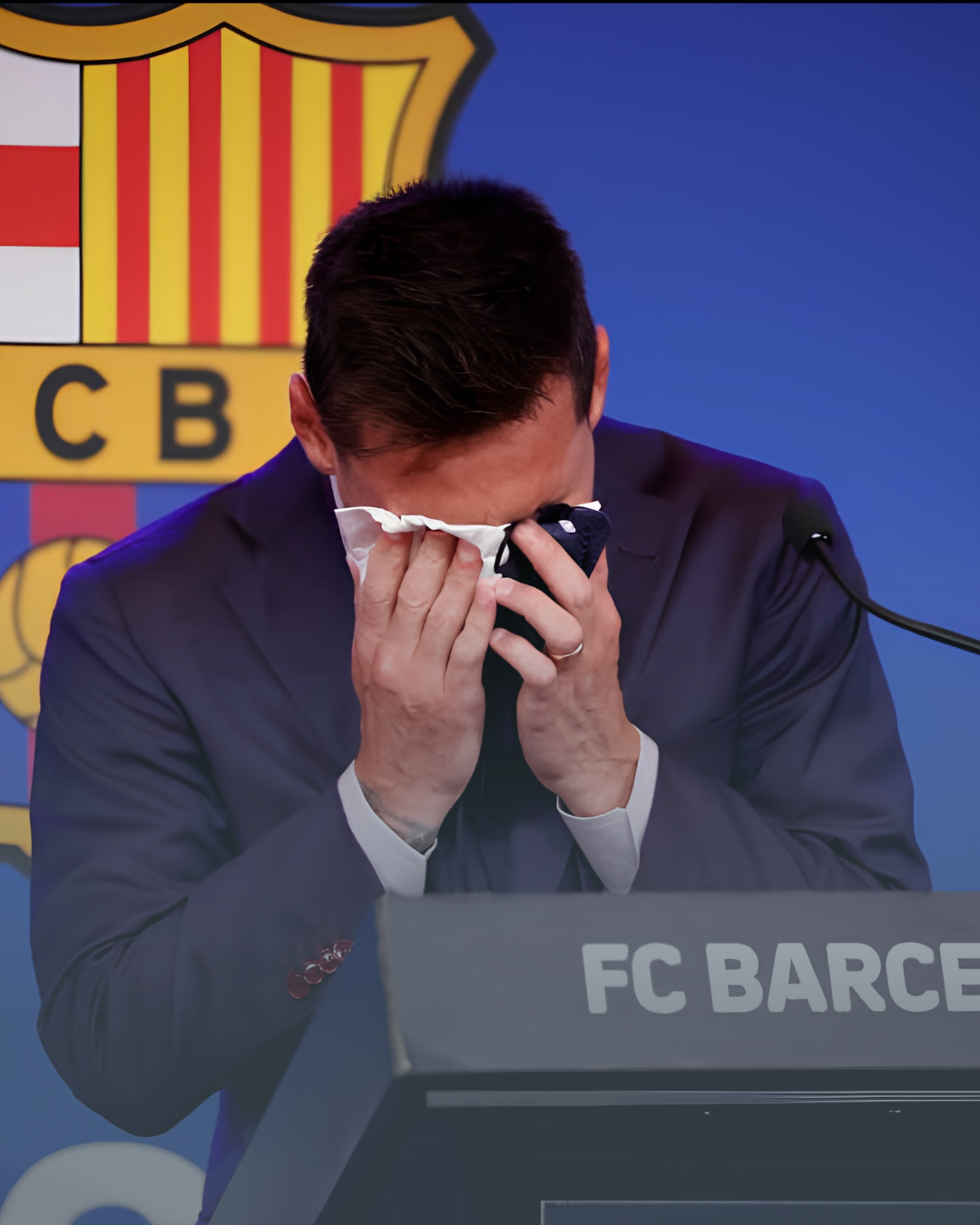
Three days later, on August 8, Messi appeared at Camp Nou for an emotional farewell press conference. Surrounded by his family, teammates and club figures, he broke down in tears as he spoke about leaving the only club he had known for most of his life.
From La Masia Prospect to Barcelona’s Greatest Player
Messi joined Barcelona’s academy as a teenager and eventually made his first-team debut in 2004.
Over the next 17 seasons with the senior team, he rewrote the club’s record books. By the time he left, he held Barcelona records for appearances, goals, victories and trophies, establishing himself as the defining figure of the club’s most successful era.
He departed after winning 35 major trophies with Barcelona, including 10 La Liga titles, seven Copa del Rey trophies, four UEFA Champions League titles, eight Spanish Super Cups, three Club World Cups and three UEFA Super Cups.
Those achievements made him the most decorated player in Barcelona history at the time.
The Numbers Behind an Unrepeatable Legacy
Messi’s Barcelona career was defined not just by trophies, but by a level of individual production that may never be matched.
He became the club’s all-time leading scorer and its most-capped player, while producing countless iconic moments at Camp Nou and across Europe.
His partnerships with players such as Xavi, Andrés Iniesta, Sergio Busquets, Luis Suárez, Neymar and Ronaldinho helped shape different generations of Barcelona football, from Pep Guardiola’s dominant side to the famous MSN attacking trio.
By the time of his departure, Barcelona itself described him as a player who had broken records at club, Spanish, European and global level.
A Farewell That Still Feels Unfinished
Perhaps the most painful part of Messi’s exit was that it did not happen in front of a full Camp Nou crowd.
His final Barcelona season was played during the COVID-19 era, meaning supporters did not get the traditional farewell many felt his career deserved.
At his press conference, Messi admitted he had not been prepared to leave and said he had been convinced he would continue at the club. He also expressed hope that he would one day return to Barcelona in some capacity.
That sense of unfinished business has remained part of the story ever since.
Five Years Later
Five years on, Messi’s departure remains one of the defining moments in modern football.
Barcelona has moved through several new eras since 2021, while Messi went on to continue his career away from Spain and add more historic achievements to his legacy. Yet for many supporters, his identity remains inseparable from the blaugrana shirt.
He arrived in Barcelona as a young boy with extraordinary potential and left as the club’s record scorer, record appearance holder and most decorated player.
Five years later, the departure still represents more than a transfer. It marked the closing of a chapter that changed Barcelona—and football itself—forever.