
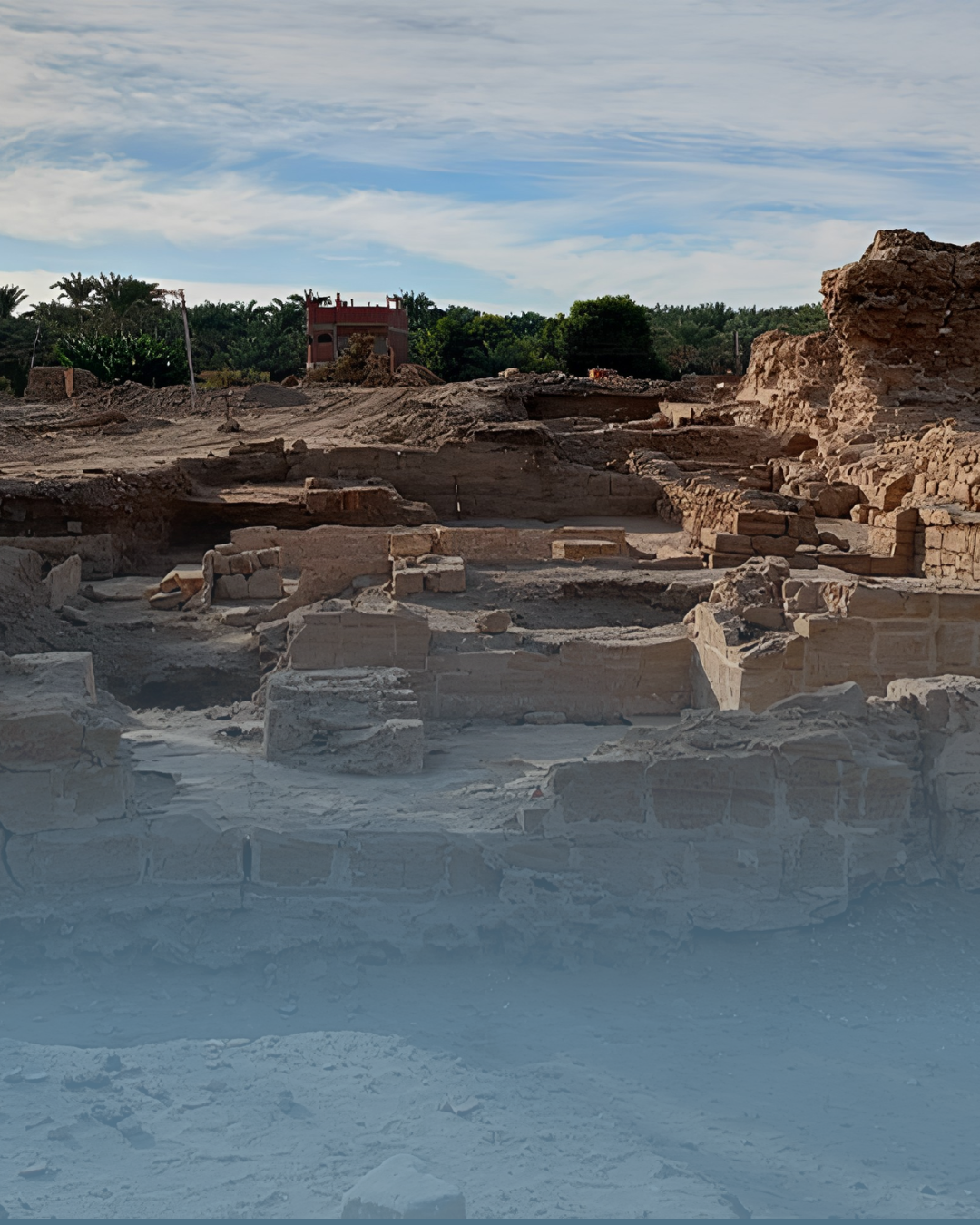
Egyptian archaeologists have uncovered new architectural remains at the ancient Al-Qasr Al-Qadeem Temple in the Bahariya Oasis, shedding fresh light on one of the Western Desert’s most important archaeological sites.
The discovery was made by an Egyptian mission from the Supreme Council of Antiquities during ongoing excavations at the Al-Qasr site, which served as the capital of the Bahariya Oasis during the Late Period of ancient Egypt. The newly uncovered sections include the remains of a sandstone chamber and inscribed stone blocks bearing the names and royal titles of Pharaoh Psamtik I, who initiated the temple’s construction during the 26th Dynasty in the 7th century BCE.
Archaeologists also revealed additional parts of the temple complex, including a large hypostyle hall supported by 16 sandstone columns, along with adjoining chambers and shrines. Fragments of decorated reliefs and hieroglyphic inscriptions dedicated to deities such as Amun-Ra, Amunet, Mut, and Khonsu were also identified at the site.
Among the most significant findings is a stone stela dating back to the reign of Amenhotep II of the 18th Dynasty, suggesting that the Bahariya Oasis had close ties with the Egyptian state nearly 800 years before the temple itself was constructed. Additional artefacts from the era of Ramesses II indicate that religious activity existed in the area long before the Late Period sanctuary was built.
Previous excavation seasons also uncovered a metal seal revealing the temple’s ancient name, “Ib-Set,” meaning “Seat of the Heart.” Other artefacts found at the site include statues of the gods Thoth and Osiris, a bronze amulet of Ra-Horakhty, and remains linked to local officials and priests who once administered the oasis.
Evidence discovered at the site further confirms that Al-Qasr remained active during the Greek and Roman periods and into the fourth and fifth centuries CE, with archaeologists uncovering inscriptions, industrial installations, and facilities used in wine and oil production.
The latest discoveries continue to highlight the historical importance of the Bahariya Oasis, offering new insights into the region’s religious, political, and economic role across successive periods of Egyptian history.