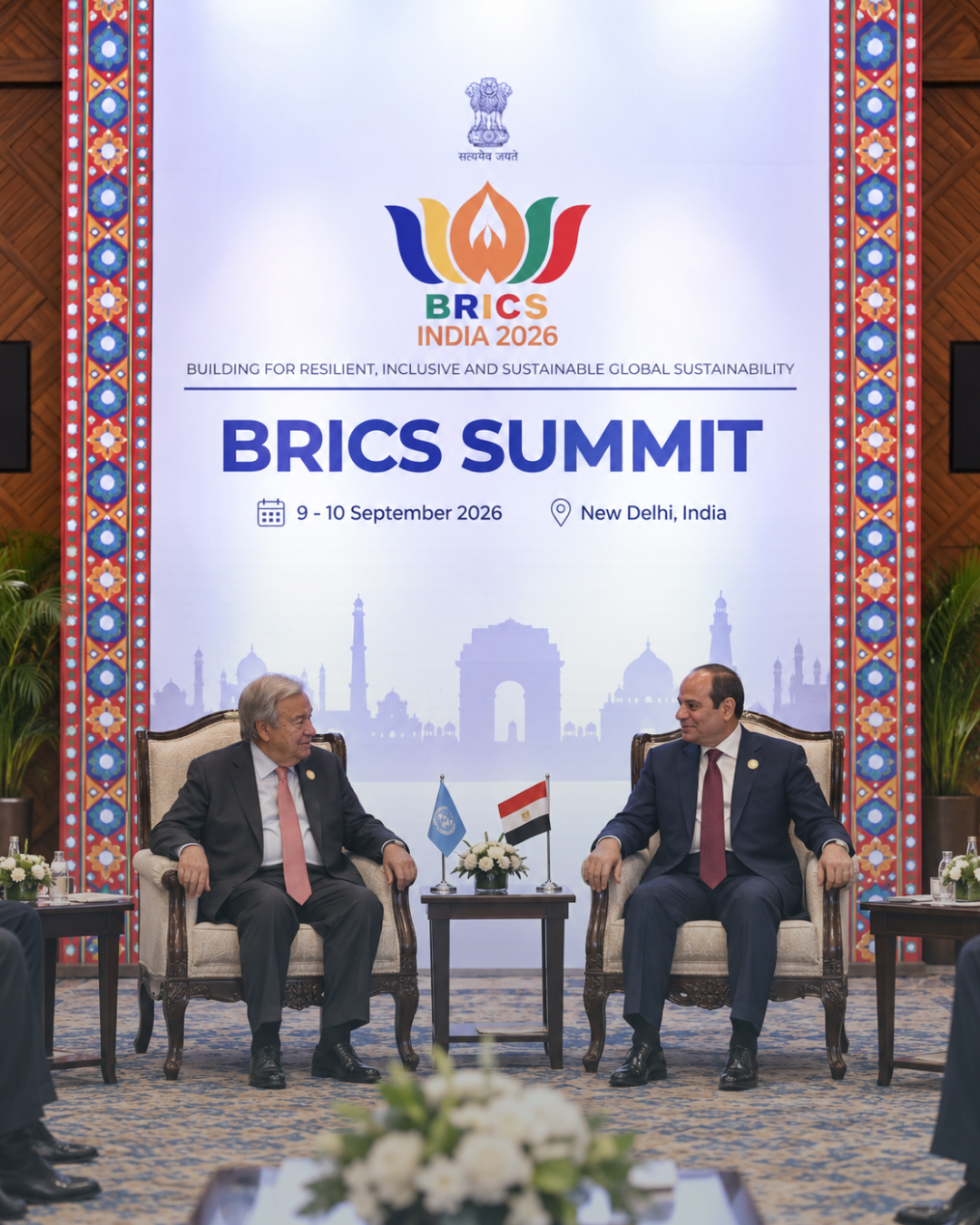
Egypt has joined fellow BRICS members in calling for a major reform of the United Nations Security Council, with the bloc pushing for greater representation for developing countries, particularly from Africa, Asia and Latin America.
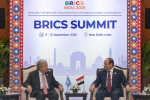
The call was included in the 2026 BRICS New Delhi Declaration, adopted by leaders during the 18th BRICS Summit in India on September 12–13.
President Abdel Fattah El-Sisi led Egypt’s delegation to the summit and participated in the closed session where the declaration was adopted as the gathering’s final document.
The declaration argues that the current international system needs to better reflect today’s geopolitical realities and gives particular attention to reforming the Security Council, where Africa currently has no permanent seat.
What Does the BRICS Declaration Say About the UN Security Council?
The New Delhi Declaration calls for a “comprehensive reform” of the United Nations, including the Security Council, with the aim of making it more democratic, representative, effective and efficient.
BRICS leaders specifically called for greater representation of developing countries within Security Council membership.
The declaration identifies countries from Africa, Asia and Latin America as needing a stronger role in global decision-making and says reform should amplify the voice of the Global South.
The document also formally recognizes the aspirations of African countries expressed through the Ezulwini Consensus and Sirte Declaration, which form the African Union’s common position on Security Council reform.
Africa Currently Has No Permanent Security Council Seat
One of the central issues behind the reform push is Africa’s absence from the Security Council’s permanent membership.
The Security Council currently consists of 15 members, including five permanent members:
- China
- France
- Russia
- the United Kingdom
- the United States
The other 10 seats rotate between countries elected for two-year terms.
Despite having 54 UN member states and representing a major share of the world’s population, Africa has no permanent seat.
That imbalance has become one of the main arguments behind calls to restructure the Council.
What Does Africa Want?
The African Union has maintained a common position on Security Council reform for more than two decades.
Under the Ezulwini Consensus and Sirte Declaration, Africa is calling for at least two permanent seats on an expanded Security Council, with all the rights and privileges associated with permanent membership.
If the veto remains part of the Security Council system, the African Union says those permanent African members should also receive veto rights.
Africa is additionally seeking a total of five non-permanent seats on the Council.
The African Union has described the continent’s continued exclusion from permanent membership as a historical imbalance that should be corrected.
BRICS Formally Recognizes Africa’s Position
The 2026 declaration is significant because it does not simply make a general call for more developing-country representation.
It explicitly recognizes the legitimate aspirations of African countries under the Ezulwini Consensus and Sirte Declaration.
That gives Africa’s long-standing reform demand additional political backing from a bloc that includes two existing permanent Security Council members — China and Russia.
China and Russia also reiterated their support for Brazil and India having a greater role within the United Nations, including the Security Council.
However, the declaration stops short of naming specific African countries that should receive permanent seats.
Under the African Union’s position, the continent itself would determine its representatives.
Egypt Adopted the New Delhi Declaration With BRICS
President El-Sisi attended the summit’s closed session under the theme “Inclusive Global Governance and Strengthening Multilateral Action.”
Egypt participated in the adoption of the New Delhi Declaration as the summit’s final political document.
That means the declaration reflects a collective BRICS position supported by Egypt alongside the bloc’s other members.
Egypt has been a full BRICS member since January 2024, making the New Delhi gathering its third consecutive summit as a member of the expanded group.
El-Sisi Calls for a More Balanced Global System
During his address to BRICS leaders, El-Sisi emphasized the growing importance of the group as a platform connecting major countries of the Global South.
He argued that current international challenges — including security crises, disruptions to trade, energy markets and supply chains — require stronger cooperation between developing economies.
The Egyptian president said BRICS could play a larger role in promoting South-South cooperation and helping build a more balanced international order.
Egypt has increasingly used BRICS membership to support calls for changes to the architecture of global economic and political governance.
Egypt Also Backs Wider UN Reform
Egypt’s support is not limited to Security Council membership.
During a meeting with UN Secretary-General António Guterres on the sidelines of the BRICS summit, El-Sisi reaffirmed Egypt’s support for broader efforts to reform the United Nations system.
The discussions covered efforts to improve coordination across UN institutions, review mandates and make the organization more effective.
The BRICS declaration similarly calls for changes across the UN system, including greater representation of developing countries in senior positions and international decision-making structures.
BRICS Wants a Stronger Global South Voice
The Security Council proposal forms part of a wider BRICS argument that major international organizations still reflect a global balance of power established decades ago.
The New Delhi Declaration calls for greater participation by emerging markets and developing countries, particularly those from Africa, Asia, Latin America and the Caribbean.
BRICS members argue that countries representing a growing share of the global population and economy should have greater influence over institutions responsible for international security, development and financial governance.
This broader agenda has become one of the bloc’s defining political themes as its membership has expanded.
Why Security Council Reform Is So Difficult
Calls to reform the Security Council are not new.
Countries have debated enlarging the Council and changing its membership structure for decades, but reaching an agreement has proven extremely difficult.
Any major amendment to the UN Charter would require approval from two-thirds of UN member states, as well as ratification by all five permanent Security Council members.
That means reform cannot happen simply because BRICS or the African Union supports it.
Questions also remain over:
- how many permanent seats should be added;
- which countries should receive them;
- whether new permanent members should have veto powers;
- whether the veto itself should be changed; and
- how different geographic regions should be represented.
These disagreements have repeatedly slowed negotiations.
Why Africa Is Central to the Debate
Africa has arguably become the strongest case used by supporters of expansion.
The continent accounts for more than a quarter of UN member states yet remains excluded from permanent representation on the body responsible for some of the world’s most important peace and security decisions.
The African Union reiterated its position again in May 2026, saying the continent continues to demand no fewer than two permanent seats and five non-permanent seats.
For African governments, the issue is particularly significant because a large portion of the Security Council’s agenda historically concerns conflicts, peacekeeping operations and political situations on the African continent.
What Would Reform Mean for Egypt?
The New Delhi Declaration does not say Egypt is seeking a permanent Security Council seat for itself.
Instead, Egypt is supporting the broader African and Global South position calling for increased representation.
Under the African Union framework, any permanent African representatives would ultimately be selected according to a continental process rather than automatically assigned to particular states.
Egypt’s backing therefore fits within its wider diplomatic positioning as both an African and Arab state seeking a stronger role for developing economies in international institutions.
BRICS Continues to Expand Its Political Role
BRICS began primarily as a grouping of major emerging economies but has increasingly expanded its focus into international governance, diplomacy, technology, climate finance and security.
Egypt’s membership has given Cairo another platform through which to promote its economic and diplomatic priorities.
At the 2026 summit, El-Sisi described BRICS as an important framework capable of helping countries of the Global South respond collectively to economic and geopolitical challenges.
The New Delhi Declaration reflects that changing role, with Security Council reform now forming part of the bloc’s broader push for a more multipolar international system.
What Happens Next?
The BRICS declaration itself cannot change the structure of the United Nations.
Instead, it adds political pressure to negotiations already taking place within the UN over Security Council reform.
African countries are expected to continue lobbying for the implementation of the Ezulwini Consensus, while countries including Brazil and India are also seeking expanded roles.
The biggest challenge will be turning growing political support for reform into an agreement that can win the approval of both the wider UN membership and the existing permanent powers.
For now, Egypt’s adoption of the 2026 New Delhi Declaration places Cairo firmly behind the BRICS position: the United Nations Security Council should better reflect the modern world, and Africa and the wider Global South should have a significantly stronger voice at the table.